What Wine Should You Use in Beef Bourguignon?
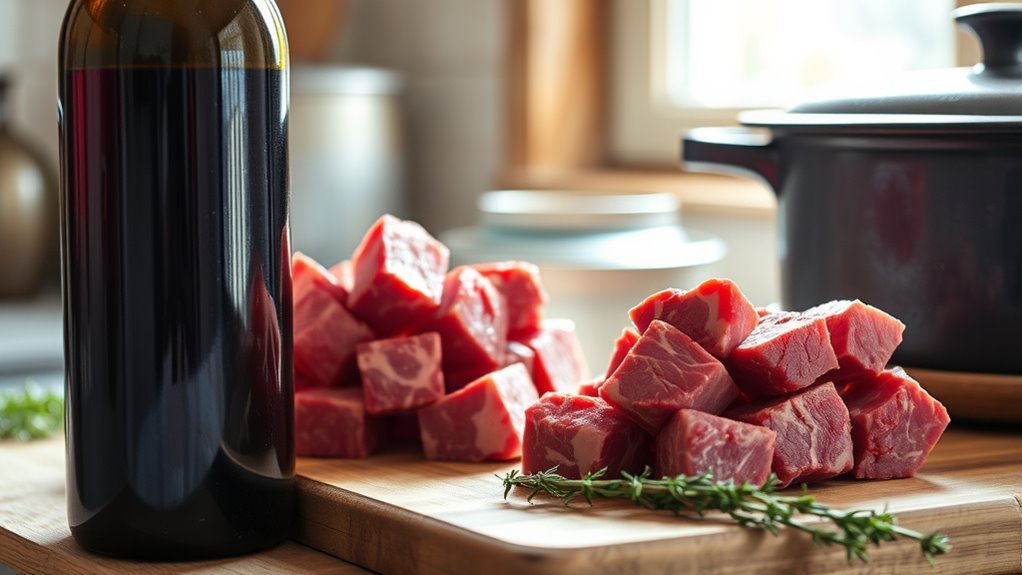
You should use a Burgundy Pinot Noir or a similar light to medium-bodied red wine with moderate tannins for beef bourguignon.
This type of wine adds earthy and fruity flavors that complement the beef and herbs perfectly.
Use it to deglaze your pan after browning the meat, then simmer to let flavors meld.
If you want to explore alternative wines or tips on selecting and incorporating wine for the best result, there’s more to discover ahead.
Traditional Wine Choices for Beef Bourguignon

While you can experiment with different wines, traditional beef bourguignon calls for Burgundy wine made from Pinot Noir, prized for its earthy and fruity notes.
This classic French dish relies on a red wine marinade that enhances the beef’s depth without overpowering it.
Burgundy wine, especially from the Côte d’Or region, offers the perfect balance of light to medium body, moderate tannins, and aromas of black cherry, raspberry, and currant.
These qualities complement the rich flavors in this traditional French stew.
Julia Child even suggests alternatives like Beaujolais or Bordeaux Saint-Émilion, but the essence remains the same.
Regional variations let you try other full-bodied reds like Syrah or Chianti, depending on your preference and availability.
But Burgundy wine remains the hallmark for authentic beef bourguignon.
How to Incorporate Wine During Cooking

Choosing the right wine is just the beginning; knowing how to use it during cooking brings out the full flavor of your beef bourguignon.
After browning the meat, deglaze the pan with wine to loosen browned bits and enhance the dish’s depth.
Boil the wine briefly before adding other ingredients to reduce acidity and concentrate its flavors.
Use enough wine to partially cover the beef during simmering, allowing it to marinate gently and infuse the meat.
As you cook, reduce the wine by half to create a rich base and prevent a watery stew.
Incorporating wine early helps the flavors meld and develop fully, ensuring your beef bourguignon bursts with rich, layered taste.
Alternative Wines That Complement the Dish

If you’re looking to experiment beyond traditional Burgundy wines, several alternatives bring unique flavors that complement beef bourguignon beautifully.
French Gamay, with its light tannins and fruity profile, mirrors Pinot Noir and balances the dish’s rich, earthy notes.
Spanish Tempranillo from Ribera del Duero offers moderate tannins and smoky undertones, adding depth and a subtle spice that enhances the stew’s complexity.
These alternative wines work well both for cooking and serving, giving you flexibility without sacrificing harmony.
Their earthy notes align perfectly with the mushrooms and herbs typical in beef bourguignon.
Selecting the Right Wine for Cooking and Serving
Even though you might want to save on wine for cooking, using a good-quality, medium-bodied Pinot Noir will bring out the authentic flavors and tenderize your beef perfectly.
When selecting wine for Beef Bourguignon, balance your choices between cooking and serving. Here’s how to get it right:
- Choose a less expensive Pinot Noir or Burgundy for cooking to avoid waste without sacrificing taste.
- Opt for a premium bottle of the same wine when serving to enhance the dining experience.
- Maintain consistency by using the same wine for both cooking and serving to harmonize flavors.
- Avoid wines with high tannins or strong oak, which can overpower the stew’s delicate richness.
This selection approach ensures your Beef Bourguignon tastes authentic and well-balanced from pot to plate.
Understanding Wine Characteristics for Optimal Pairing
Understanding the specific characteristics of wine can elevate your Beef Bourguignon by perfectly complementing its rich flavors.
When picking a wine, focus on moderate tannins to tenderize beef without overpowering it. Acidic wines balance the stew’s richness, while full-bodied wines add depth and complexity.
Earthy notes highlight umami flavors, creating harmony in flavor pairing. Balanced acidity guarantees all flavors meld smoothly for a well-rounded dish.
| Wine Type | Key Characteristics | Emotional Impact |
|---|---|---|
| Pinot Noir | Moderate tannins, earthy | Comfort and warmth |
| Burgundy | Acidic, balanced | Freshness and depth |
| Syrah | Full-bodied, robust | Boldness and richness |
| Gamay | Light tannins, fruity | Brightness and joy |
| Bordeaux | Complex, structured | Elegance and strength |
Frequently Asked Questions
What Wine Is Best for Beef Bourguignon?
You should use Burgundy Pinot Noir for beef bourguignon since its earthy, light profile with moderate tannins tenderizes beef and enhances flavor.
Choose a less expensive bottle for cooking and serve the same wine with the dish.
This way, you’ll have a cohesive dining experience that complements your meal perfectly!
Is Pinot Noir or Cabernet Sauvignon Better for Beef Bourguignon?
Think of Pinot Noir as the gentle brushstroke that perfects your Beef Bourguignon.
You’ll want Pinot’s light, earthy notes over Cabernet’s bold tannins.
Cabernet can overpower and toughen your tender stew.
Choose wisely!
What’s the Secret to Great Beef Bourguignon?
The secret’s in slow cooking with quality wine, reducing it well to balance acidity, and using tender beef cuts.
You’ll want to layer flavors patiently, letting mushrooms and herbs meld perfectly for that rich, earthy taste.
What Is the Best Wine for Cooking Beef?
You should use a good-quality red wine with moderate tannins and balanced acidity, like Burgundy Pinot Noir.
It tenderizes beef and adds depth, so stick with wines you’d enjoy drinking alongside your meal.
Conclusion
Choosing the right wine for your beef bourguignon isn’t just about tradition—it’s about revealing deep, rich flavors that dance on your tongue.
Whether you stick with a classic Burgundy or experiment with alternatives, remember: the wine you cook with and serve should sing in harmony with the dish.
So, don’t just pick a bottle—choose a partner that elevates every bite.
After all, great wine makes great memories, one sip at a time.
In conclusion, selecting the perfect wine for your beef bourguignon is essential for enhancing the dish’s flavors. Burgundy is a classic choice, but feel free to explore other options that complement the robust profile of the stew.
Ultimately, the right wine will not only elevate your dish but also make your meal memorable. Cheers to a delicious pairing!