
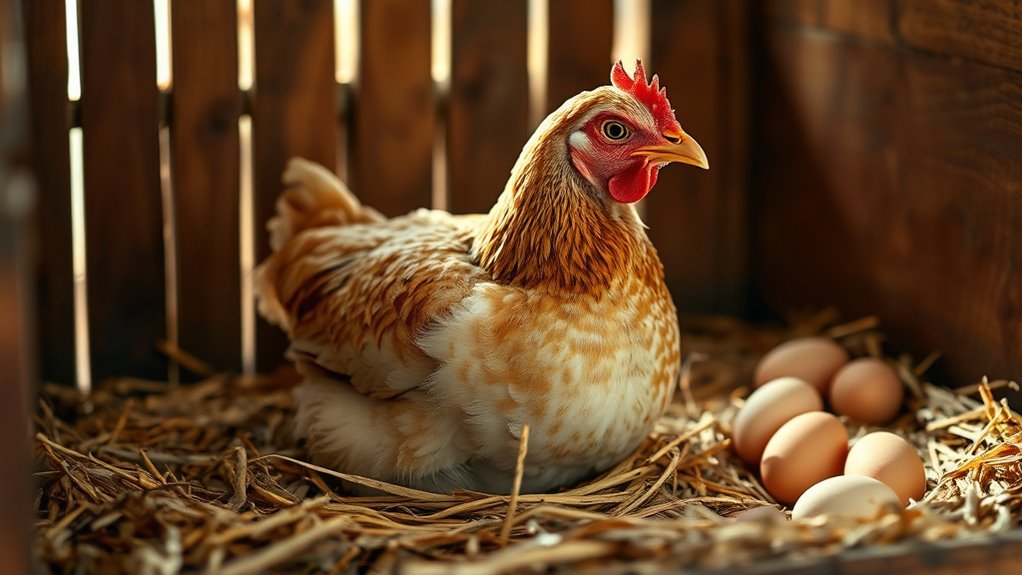
Do You Know If Your Chicken Is Egg Bound?
You’ll know your chicken is egg bound if she struggles straining to pass an egg, has a swollen abdomen, or acts lethargic and reluctant to move.
You might notice her pressing her vent against the ground or changes in droppings.
Calcium deficiency and stress often cause this condition, and if left untreated, it can become serious.
There are immediate care steps you can take and signs that indicate when professional help is needed.
Stay tuned to learn more about identifying and addressing egg binding in chickens!
What Is Egg Binding in Chickens?
Although egg binding can be alarming, understanding it helps you act quickly.
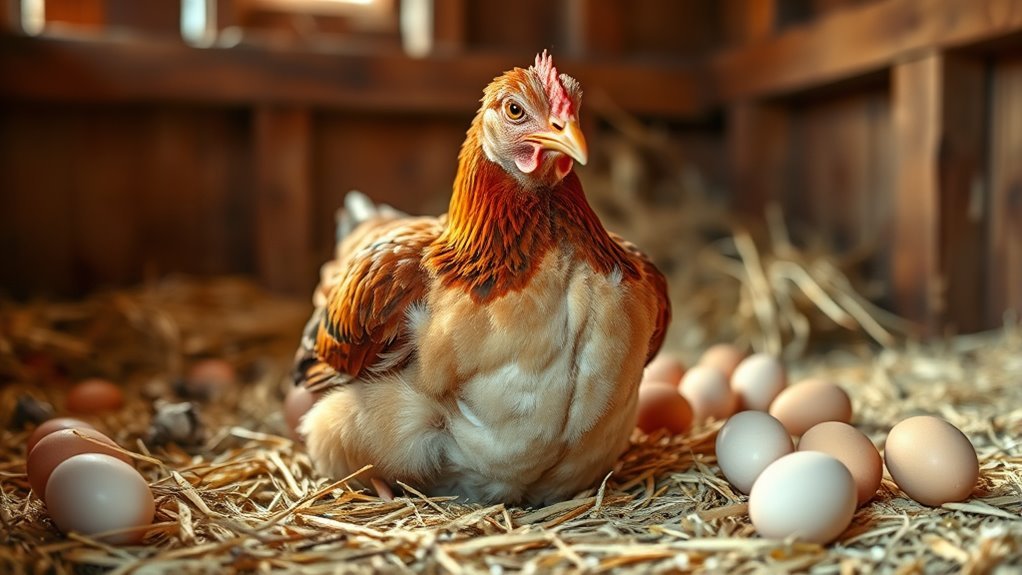
Egg binding happens when a laying hen can’t pass a stuck egg, usually because the egg is too large or misshapen.
This stuck egg often lodges near the vent or in the reproductive tract, causing discomfort and distress.
You might notice your hen straining, showing abdominal swelling, or having trouble passing feces.
One common cause is a calcium deficiency, which weakens muscles needed for egg-laying.
Stress, poor nutrition, or hormonal issues can also trigger egg binding.
If you spot these signs early, you can help your hen before serious complications develop.
Knowing what egg binding looks like ensures your laying hens get timely care and avoid dangerous health risks.
How Does Egg Laying Work in Hens?
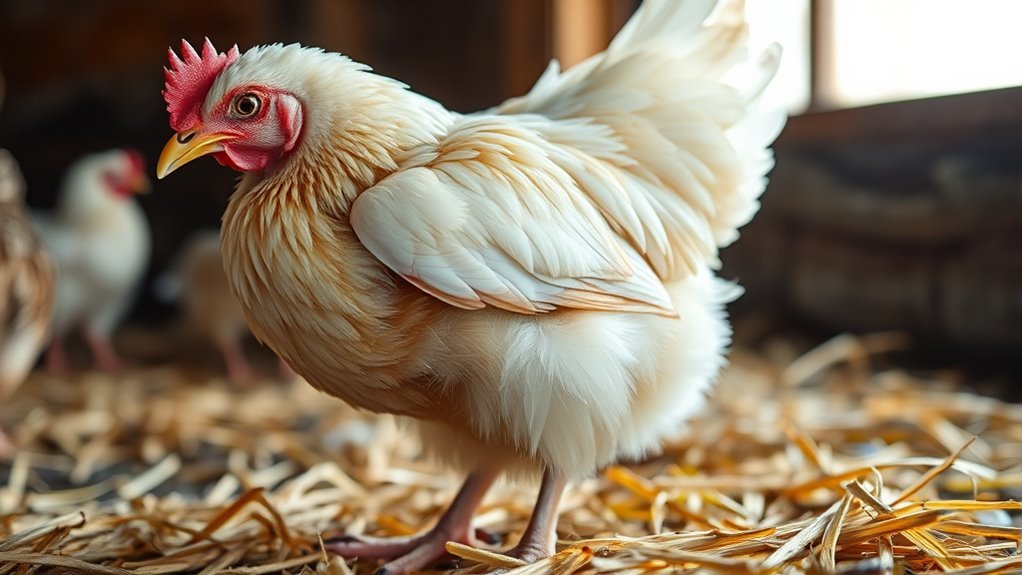
Understanding how egg laying works in hens can help you recognize what might go wrong when issues like egg binding occur.
Knowing the egg-laying process helps identify and address problems like egg binding in hens.
It all starts in the ovary, where yolks develop. Once a yolk matures, it’s released into the oviduct’s infundibulum, where fertilization can happen if sperm are present.
The egg then travels through the magnum and isthmus, receiving layers like the egg white.
In the uterus section of the oviduct, the eggshell forms around the developing egg.
This entire journey takes about 24 to 26 hours.
Once fully formed, the hen lays the egg through her vent.
Since hens produce a new ovum daily, this cycle repeats regularly.
Knowing this process helps you understand how an egg might get stuck during laying.
Common Causes of Egg Binding
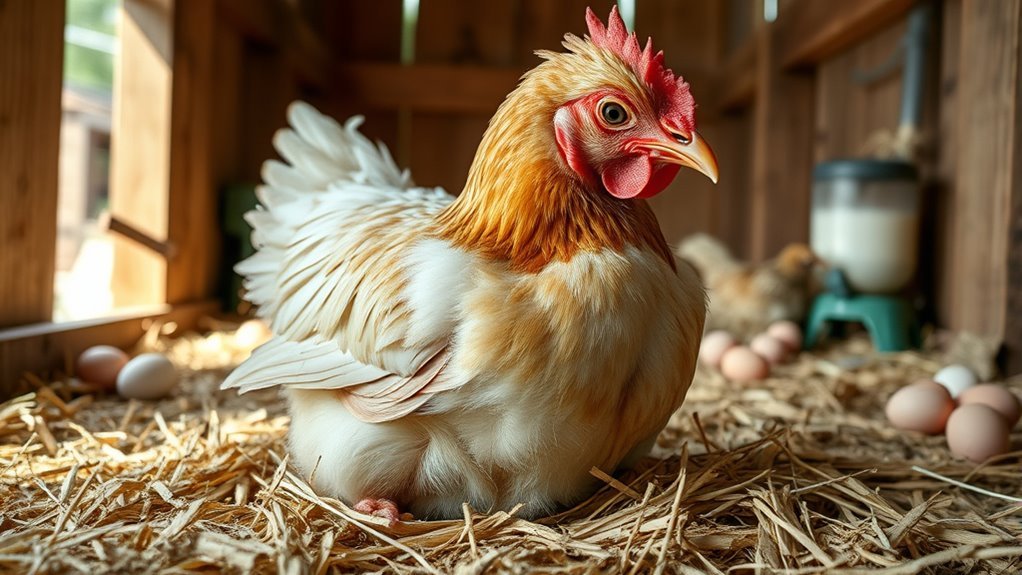
When hens produce unusually large eggs or double yolks, the size and shape can cause the egg to get stuck during laying.
This often leads to egg binding, which can be serious if not addressed.
Calcium deficiency is a common culprit—it weakens muscle contractions in the reproductive system, making it harder for the egg to pass.
Old hens are especially prone to egg binding since their muscles may lose strength over time.
Poor nutrition or cold temperatures can stiffen muscles, further complicating laying.
Additionally, if your hen’s nesting box isn’t comfortable or accessible, she might delay laying, which increases risks.
Keeping your hens healthy with proper diet and a cozy nesting box helps prevent egg binding and supports smooth muscle function.
Recognizing the Signs and Symptoms
If your hen struggles to lay an egg, you’ll notice signs like repeated straining or her pressing her vent against the ground.
These egg binding symptoms often include a swollen abdomen and lethargy.
Your bound chicken may seem reluctant to move or eat.
You can try feeling around her vent gently to detect any blockages or abnormalities.
Sometimes, she might pass soft or malformed eggs, indicating trouble.
Vocalizations and abnormal droppings—especially a lack or change in feces—are also red flags.
Since calcium plays a pivotal role in egg laying, a calcium supplement might help prevent egg binding.
Recognizing these signs early ensures you can act before the situation worsens.
This way, you can keep your hen healthy and comfortable as she tries to lay an egg.
Immediate Care for an Egg-Bound Hen
Although egg binding can be alarming, you can take immediate steps to support your hen’s recovery by creating a calm environment and providing essential care.
First, isolate her in a warm, quiet, dimly lit space to reduce stress.
Create a calm, warm, and dim environment to help reduce your hen’s stress during recovery.
Administer 500 mg of calcium citrate twice daily to help stimulate muscle contractions and facilitate egg passage.
Giving her a warm bath can relax her muscles, easing the egg’s movement.
Gently lubricate the vent with an oil lubricant like petroleum jelly or olive oil to assist with egg removal.
If she refuses to drink, offer water mixed with electrolytes and calcium via an eyedropper to prevent dehydration.
Keep a close eye on her condition, noting any changes, and be ready to seek veterinary help if her situation worsens.
Non-Invasive Treatment Methods
Since egg binding can cause significant discomfort, you’ll want to try non-invasive treatments before considering more aggressive options.
Start by soaking the hen in a warm water bath at 75-80°F with a cup of Epsom salts for 15-30 minutes. This relaxes her muscles and can ease egg passage.
Gently lubricate the vent area with petroleum jelly or olive oil to reduce friction.
You can also softly massage her abdomen to help reposition the egg without causing harm.
Administering liquid calcium may strengthen contractions, aiding in expelling the egg.
Pay close attention to egg binding symptoms and repeat warm soaks hourly if needed.
These steps often relieve discomfort and improve your hen’s chances of passing the egg naturally, all while avoiding invasive measures.
When to Seek Veterinary Help
When should you seek veterinary help for an egg-bound hen?
If your egg-bound chicken shows no signs of passing the egg after 24 hours, you need to seek veterinary assistance immediately.
A delay in treatment can lead to fatal complications.
Also, contact a vet if she shows severe egg binding symptoms like labored breathing, bleeding, or worsening condition despite home care.
If you can’t feel an egg or the swelling near the vent feels hard and unyielding, that’s a sign to get professional help.
A distended abdomen that doesn’t improve with supportive treatments or soaks also requires prompt veterinary care.
Don’t hesitate to seek assistance if you’re unsure or if her condition deteriorates, ensuring the egg can be safely removed without risking her life.
Preventing Egg Binding Through Nutrition
If you’ve dealt with an egg-bound hen or want to avoid that stressful situation altogether, focusing on nutrition can make a big difference.
Start by providing a high-quality layer feed rich in calcium, which is essential for strong eggshells and healthy muscle function.
Provide high-quality, calcium-rich layer feed for strong eggshells and healthy muscles.
Supplement this with crushed oyster shells or limestone to boost calcium intake further.
Don’t forget about vitamin D3—either from sunlight or supplements—since it helps your hen absorb calcium efficiently, reducing the risk of egg binding.
Also, try to avoid overfeeding treats, as they can disrupt the nutritional balance and contribute to obesity, a known factor in egg binding.
Keep fresh water available to maintain hydration and electrolyte balance, which supports reproductive health.
Monitoring and Managing Egg Production
Although egg binding can be serious, you can catch early warning signs by regularly monitoring your hens’ egg production and behavior.
Keep track of egg production rates and sizes; any sudden drop or change may signal symptoms of egg binding.
Watch for distress signs like straining, unusual vocalizations, or swelling near the vent, which often indicate trouble.
Perform gentle physical checks around the abdomen and vent to detect early egg impaction.
Verify your hens get enough calcium in their diet to support strong eggshells, reducing egg binding risk.
Also, provide quiet, dark nesting areas to encourage proper laying and minimize stress.
Frequently Asked Questions
How to Check Chicken for Egg-Bound?
You gently feel inside your hen’s cloaca with a lubricated finger for a hard mass.
Watch for straining, swelling near the vent, lethargy, or difficulty standing to confirm if she’s egg bound.
How Do Chickens Act When They Are Egg-Bound?
Imagine your chicken as a car stuck in first gear, straining hard but going nowhere.
She’ll squat repeatedly, squawk loudly, and look distressed.
Isolating herself, she might refuse food or water as she struggles to lay an egg.
Can a Chicken Still Poop if It’s Egg-Bound?
Yes, your chicken can still poop if it’s egg-bound, but it might be uncomfortable.
Watch for changes in droppings or reduced output.
These signs can indicate complications needing prompt attention to avoid serious health issues.
How Long Can Chicken Be Egg-Bound For?
Your chicken can be egg-bound for about 24 to 48 hours before severe health risks arise.
Act quickly—if she’s stuck longer than 12-24 hours, get veterinary help to improve her chances of recovery.
Conclusion
Did you know that up to 10% of laying hens can experience egg binding at some point?
It’s a serious issue you want to catch early. By knowing the signs and taking quick action, you can help your hen avoid complications.
Remember, good nutrition and monitoring her egg production are key to prevention.
If you ever feel unsure, don’t hesitate to get veterinary help—your hen’s health depends on it!
In conclusion, being aware of the signs of egg binding and taking preventive measures is crucial for your hen’s well-being.
Keep an eye on her diet and egg-laying patterns to reduce the risk.
If you suspect egg binding, don’t wait—seek veterinary assistance.
Your hen’s health is important, and taking proactive steps can make a big difference!