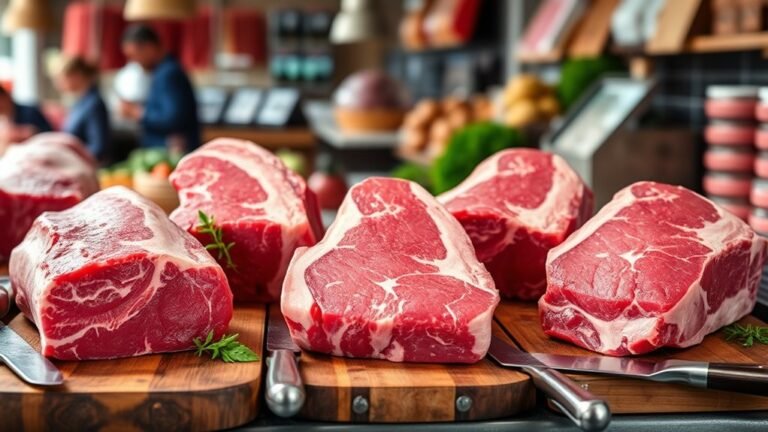
Is Grass-Fed Beef Better for Cholesterol?
Is Grass-Fed Beef Better for Cholesterol?
You’ll get more heart-healthy omega-3s and antioxidants with grass-fed beef, which can support better cholesterol balance.
It’s generally leaner, with less saturated fat that can raise LDL cholesterol.
However, both grass-fed and grain-fed have similar cholesterol levels and modest effects on your lipid profile.
Choosing lean cuts and healthy cooking methods matters just as much.
If you want to understand how these differences affect your heart health and diet choices, there’s more to contemplate.
When it comes to making informed choices about your diet, understanding the nuances of grass-fed versus grain-fed beef can help you prioritize your health.
Nutritional Differences Between Grass-Fed and Grain-Fed Beef
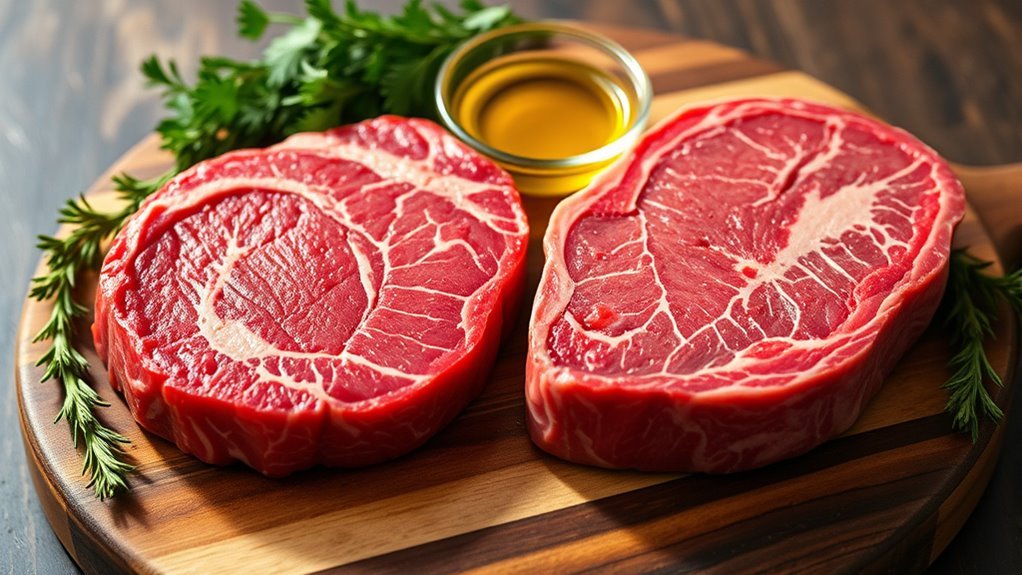
Although both grass-fed and grain-fed beef provide essential nutrients, grass-fed beef typically contains less total and saturated fat, making it a leaner choice.
Grass-fed beef is generally leaner, with lower total and saturated fat than grain-fed options.
When you choose grass-fed beef, you get a healthier fatty acid profile influenced by the animal’s pasture-based diet. This means more omega-3 fatty acids, like EPA, DPA, and DHA, which contribute positively to your overall health.
Grass-fed beef also has higher levels of conjugated linoleic acid (CLA), a fat linked to several health benefits.
Both beef types contain saturated fat, but grass-fed versions usually have less, potentially affecting cholesterol levels favorably.
Impact of Omega-3 Fatty Acids on Cholesterol Levels
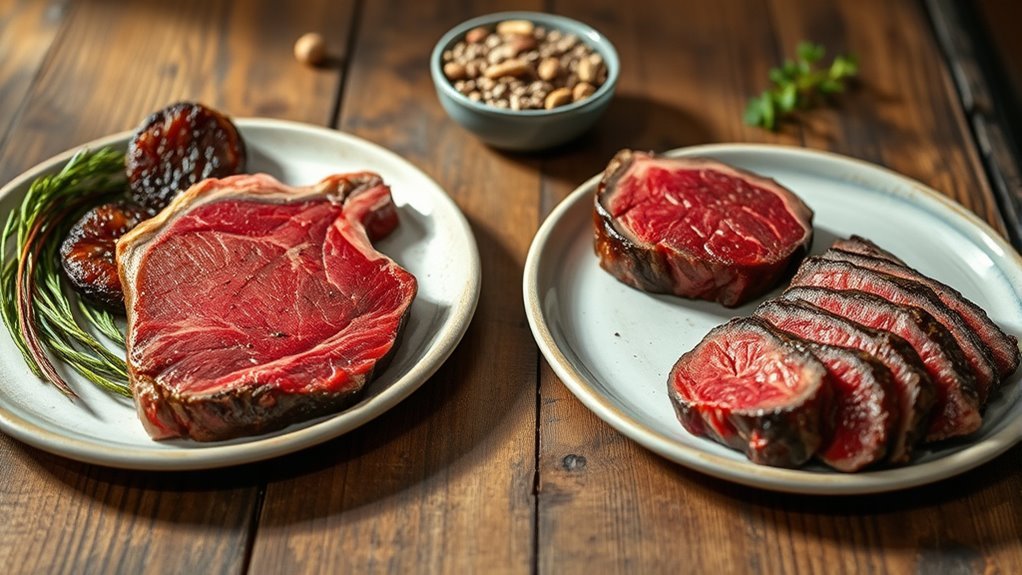
When you choose grass-fed beef, you boost your intake of omega-3 fatty acids like EPA, DPA, and DHA.
These can help raise HDL (“good”) cholesterol and reduce inflammation. Grass-fed beef contains about three times more omega-3 fatty acids than grain-fed beef, improving the fatty acid composition of your diet.
These omega-3s contribute to better cholesterol levels by increasing HDL and may support cardiovascular health by lowering triglycerides.
However, a typical serving provides only a small portion of your daily omega-3 needs.
So, the overall impact depends on your total intake and fat balance in your diet.
While omega-3s help enhance your cholesterol profile, their benefits work best alongside other heart-healthy dietary choices.
Role of Saturated Fat in Beef and Its Effect on LDL Cholesterol
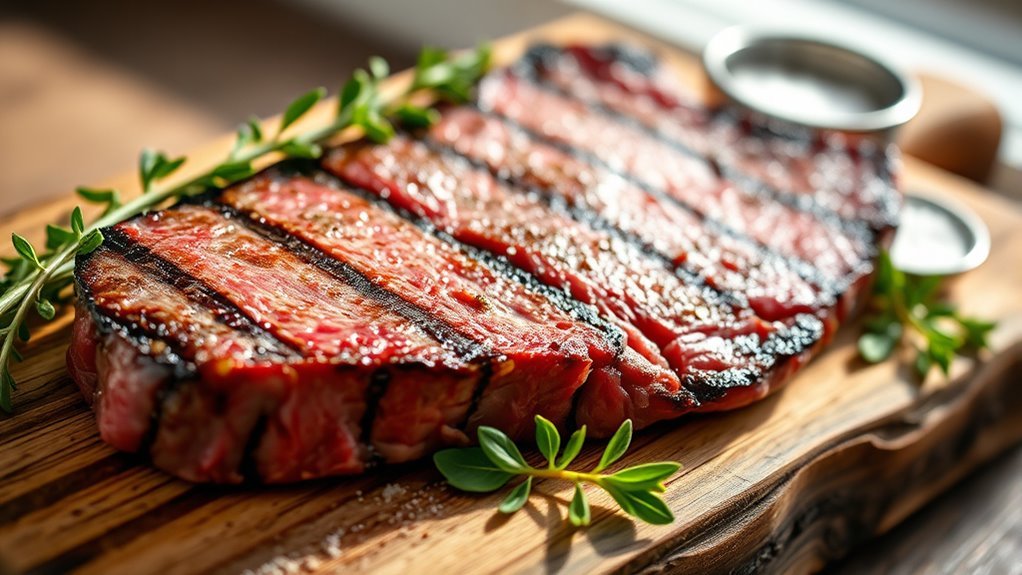
Because saturated fats in beef can raise LDL (“bad”) cholesterol, it’s important to understand their role in your diet.
Both grass-fed and grain-fed beef contain saturated fat, but grass-fed beef usually has slightly less.
However, the cut selection matters more since some cuts contain higher saturated fat levels.
Stearic acid, a saturated fat in beef, doesn’t raise LDL cholesterol because your body converts it into oleic acid, a healthier fat.
Trimming visible fat and opting for lean cuts can improve your lipid profile by lowering saturated fat intake.
| Fatty Acid | Effect on LDL Cholesterol | Common in |
|---|---|---|
| Myristic (C14:0) | Raises LDL | Grass-fed & Grain-fed |
| Palmitic (C16:0) | Raises LDL | Grass-fed & Grain-fed |
| Stearic (C18:0) | Neutral; converts to oleic acid | Grass-fed & Grain-fed |
Conjugated Linoleic Acid (CLA) and Heart Health Benefits
Since grass-fed beef contains higher levels of conjugated linoleic acid (CLA), you may benefit from its potential heart health effects.
CLA is known for its anti-inflammatory properties, which can support cardiovascular health by reducing inflammation linked to heart disease.
CLA’s anti-inflammatory effects may help reduce heart disease-related inflammation, supporting cardiovascular health.
Some studies suggest that consuming grass-fed beef with its higher CLA content might help lower LDL cholesterol, a major factor in cholesterol levels that affects heart risk.
Although the evidence isn’t definitive, CLA’s role in reducing body fat and improving muscle mass also indirectly supports heart health.
Keep in mind that the CLA amount varies with cattle diet and breed, so grass-fed beef generally offers more than grain-fed.
While CLA shows promise for improving cholesterol levels and heart health, more research is needed to confirm its full benefits.
Comparison of Antioxidant Vitamins in Grass-Fed Vs Grain-Fed Beef
Although both grass-fed and grain-fed beef provide essential nutrients, grass-fed beef contains markedly higher levels of antioxidant vitamin E.
This vitamin E plays a crucial role in protecting your body from oxidative damage.
This increase enhances oxidative stability, helping reduce harmful free radicals.
The difference stems from varied forage intake, with grass-fed cattle consuming more antioxidant-rich pastures.
| Attribute | Grass-Fed Beef | Grain-Fed Beef |
|---|---|---|
| Vitamin E Content | High | Low |
| Antioxidant Effect | Strong protection | Weaker protection |
| Oxidative Stability | Enhanced | Reduced |
Choosing grass-fed beef means benefiting from higher antioxidant levels.
This supports overall cellular health and helps reduce oxidative stress.
Ground Beef Fatty Acid Profiles and Cholesterol Implications
Beyond antioxidant vitamins, the fat composition in ground beef from grass-fed and grain-fed cattle varies markedly, influencing its health effects.
If you choose grass-fed beef, you get higher levels of omega-3 fatty acids like ALA, EPA, DPA, and DHA, which are beneficial fats linked to heart health.
Grain-fed beef, however, tends to have more monounsaturated fats such as oleic acid, also known for cardiovascular benefits.
Despite these differences in fatty acid profiles, both types of ground beef contain similar cholesterol amounts—around 50-60 mg per 4-ounce serving.
Current research shows these variations don’t significantly impact your LDL or HDL cholesterol levels.
Effects of Beef Consumption on HDL and LDL Cholesterol
When you consume grass-fed or grain-fed beef, studies show neither markedly raises your LDL cholesterol levels.
The effects on HDL cholesterol vary: grass-fed beef may lower HDL in men, while grain-fed beef can increase HDL in men with normal cholesterol.
However, these impacts depend more on the cut and saturated fat content than the beef type itself.
Importantly, neither type adversely affects cardiovascular health or risk factors for type II diabetes.
Here’s what you should know about beef consumption and cholesterol:
- Both beef types don’t substantially raise LDL cholesterol.
- HDL cholesterol changes vary by beef type and individual.
- Fat content and cut play a bigger role than feeding method.
- Beef consumption may improve metabolic health by lowering plasma insulin.
Choosing wisely matters more than grass-fed versus grain-fed.
Selecting Lean Cuts for Better Cholesterol Management
Managing cholesterol isn’t just about choosing between grass-fed or grain-fed beef; it also comes down to the cuts you select.
Opt for lean cuts of beef with 10% fat or less, like sirloin or round steaks, to reduce saturated fat intake and help lower cholesterol levels.
Grass-fed beef often has a favorable fat content, but trimming visible fat from any beef further supports heart health.
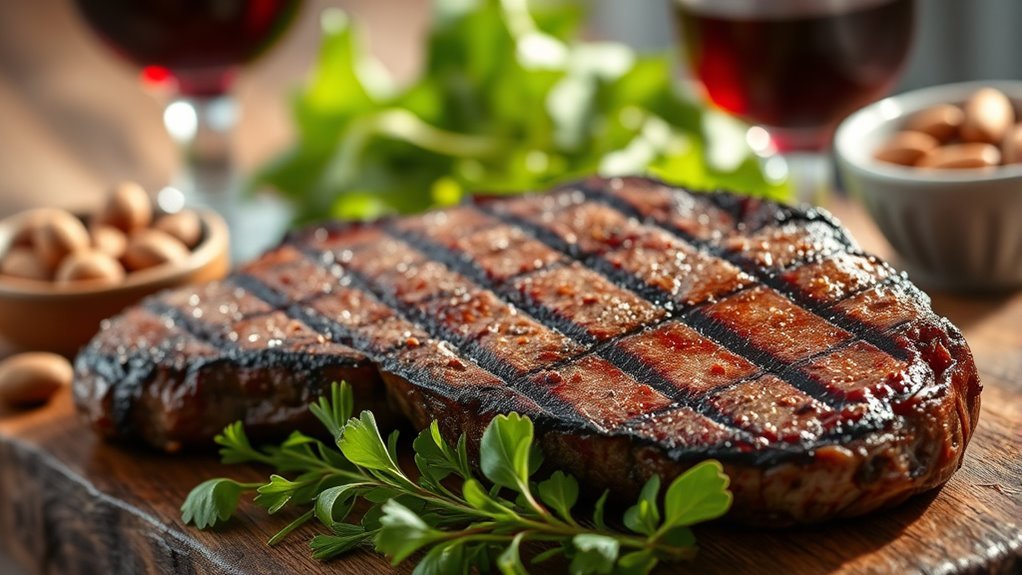
Cooking methods such as grilling or broiling let excess fat drain away, making your meal even healthier.
Look for labels like “extra lean” or “lean” to guarantee you’re choosing beef that benefits cholesterol management.
Pairing lean beef with vegetables and whole grains also enhances your overall heart health while enjoying the flavor of grass-fed beef.
Cost Considerations and Nutritional Value of Grass-Fed Beef
Although grass-fed beef usually costs more than grain-fed options, its higher levels of omega-3 fatty acids and antioxidants can make it a worthwhile choice for your health.
When weighing cost considerations, remember grass-fed beef offers greater nutritional value, which may justify the price if you’re monitoring cholesterol content.
Here’s what you should know:
- Contains more omega-3 fatty acids, beneficial for heart health.
- Typically lower in saturated fat compared to grain-fed beef.
- Offers antioxidants that support overall health benefits.
- Higher cost reflects longer raising periods and pasture management.
If budget is a concern, you might consider alternatives like bison or turkey, which are often more affordable and lower in saturated fat.
Choosing grass-fed beef means investing in quality nutrition that supports better cholesterol management.
Current Research Gaps and Recommendations for Beef Consumption
Because research on grass-fed beef’s effects on cholesterol and heart health remains limited, you should approach claims about its superiority with caution.
Current research gaps mean there’s no conclusive evidence that grass-fed beef dramatically improves cholesterol compared to grain-fed options.
Most studies show similar effects on cholesterol levels, highlighting the need for long-term studies to clarify its true impact on cardiovascular health.
While grass-fed beef might contain less saturated fat, experts advise focusing on overall diet quality and lean cuts rather than relying solely on beef type.
To manage cholesterol effectively, you should consider lifestyle factors alongside your beef choices.
Until more rigorous trials are available, moderation and balanced nutrition remain the best strategies for supporting heart health.
Frequently Asked Questions
Can I Eat Grass-Fed Beef if I Have High Cholesterol?
Yes, you can eat grass-fed beef if you have high cholesterol, but choose lean cuts and eat it in moderation.
Pair it with veggies and whole grains to support heart health while managing your cholesterol levels effectively.
It’s all about balance! Enjoy those flavors while keeping an eye on your overall diet.
What Are the Disadvantages of Grass-Fed Beef?
You’ll find grass-fed beef can have higher saturated and trans fats, which might raise your LDL cholesterol.
It’s often pricier and less available, so managing costs and cholesterol could be challenging if you eat it frequently.
What Kind of Beef Is Good for High Cholesterol?
You should choose lean beef with 10% fat or less, as it helps manage cholesterol effectively.
Grass-fed options provide more omega-3s and conjugated linoleic acid, which can further support heart health and lower LDL levels.
Is Grass-Fed Beef the Healthiest Beef to Eat?
Grass-fed beef is often healthier because it has more omega-3s and less saturated fat.
But you should still choose lean cuts and watch portion sizes to manage cholesterol effectively, regardless of whether it’s grass-fed or not.
Conclusion
You might think choosing grass-fed beef automatically means better cholesterol, but the reality isn’t so simple.
While grass-fed beef offers more omega-3s and antioxidants, it still contains saturated fats that can raise LDL cholesterol.
Balancing these benefits with potential risks is key.
So, instead of blindly switching, consider lean cuts and moderation—your heart deserves both care and caution in every bite you take.
In conclusion, grass-fed beef does have some advantages, such as higher omega-3s and antioxidants, which can be beneficial for heart health.
However, it’s important to remember that it still contains saturated fats that may impact cholesterol levels.
Choosing lean cuts and practicing moderation is essential for maintaining healthy cholesterol levels.
Be mindful of your overall diet and lifestyle to ensure you’re making the best choices for your heart health.