Does Hair Color Kill Lice and Eggs?
You might think that using hair color can kill lice, but it’s important to understand that it only affects live lice, not their eggs (nits).
The chemicals found in hair dye, such as ammonia and hydrogen peroxide, can weaken and kill active lice. However, they don’t penetrate the tough shells that protect the eggs stuck to your hair shafts.
This means that nits can survive and hatch later, leading to a reinfestation.
If you want to effectively eliminate lice, it’s crucial to combine dye with manual removal and proper treatments.
There are safe and effective options available that can help in the battle against lice, so be sure to explore those as well!
Understanding Head Lice and Their Life Cycle

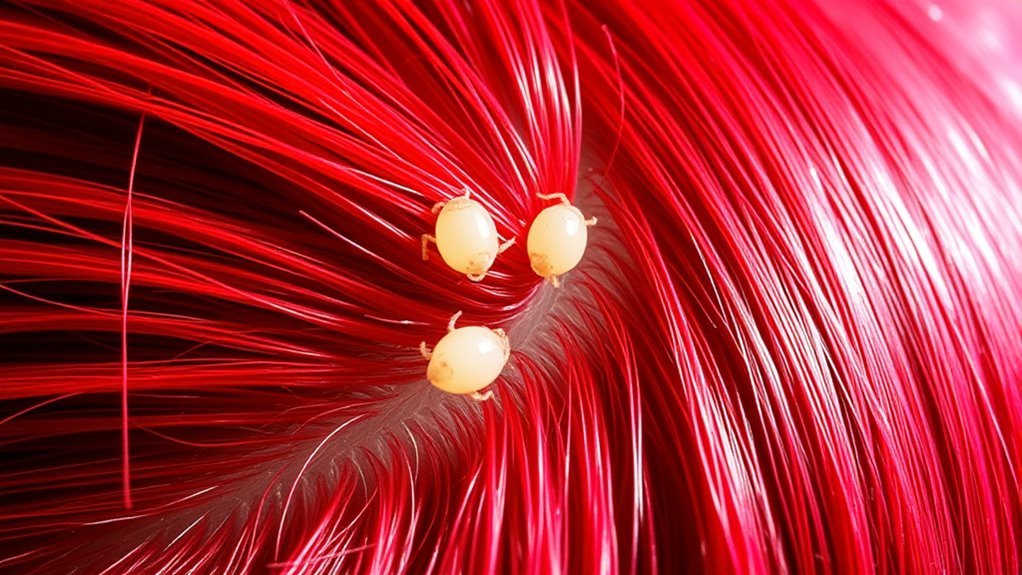
Although head lice are tiny, they can cause significant discomfort by feeding on your scalp and laying eggs called nits.
These nits, or eggs, stick firmly to your hair shafts near the scalp. They’re protected by a tough eggshell, which makes treatment challenging.
The head lice life cycle has three stages: eggs (nits), nymphs, and adult lice.
After hatching in 7-10 days, nymphs mature within about nine days into adult lice, ready for reproduction.
This continuous cycle sustains an infestation if not properly treated.
Since the eggshell shields the eggs from many treatments, you’ll need to combine manual removal with targeted treatment.
Doing this will help break the life cycle effectively and eliminate both nits and adult lice from your hair.
Chemical Components in Hair Dye and Their Effects on Lice

While manual removal and targeted treatments address the lice and their eggs, some people wonder if hair dye might help eliminate these pests.
Hair dye chemicals like ammonia and hydrogen peroxide can affect lice due to their chemical components.
Ammonia raises the pH level, disrupting lice respiration, while hydrogen peroxide creates oxidative stress, potentially causing lice kill.
However, these effects vary based on chemical efficacy, concentration, and exposure time.
Importantly, hair dye chemicals do not penetrate lice eggs, so insecticides remain essential for full treatment.
| Chemical Component | Effect on Lice |
|---|---|
| Ammonia | Raises pH level, disrupts respiration |
| Hydrogen Peroxide | Causes oxidative stress, may kill lice |
| Hair Dye Chemicals | Toxic on contact but variable efficacy |
| Lice Eggs | Protected from chemicals, unaffected |
Why Hair Dye Does Not Kill Lice Eggs (Nits)

Three key reasons explain why hair dye doesn’t kill lice eggs (nits):
First, the dye can’t penetrate their hard shells.
The eggs cling tightly to hair strands, and the chemicals lack ovicidal properties.
Hair dye’s chemical penetration is limited by the hard shell protecting each nit.
This prevents the topical chemicals from reaching and killing the eggs.
Since nits are firmly attached to hair strands, hair dye mostly affects the hair itself, not the eggs.
Additionally, the chemical components in hair dye don’t have ovicide effects, so they fail to disrupt egg viability.
Because of this, lice eggs remain alive after dyeing and can hatch into new lice.
To effectively eliminate lice eggs, you need targeted lice treatment methods designed to kill nits, not just rely on hair dye.
The Role of Ammonia and Hydrogen Peroxide in Lice Mortality
Hair dye doesn’t kill lice eggs, but some of its ingredients can affect live lice.
Ammonia raises the pH level, causing cuticle disruption that weakens lice’s protective outer layer. This chemical reaction irritates lice tissues, contributing to lice elimination.
Ammonia disrupts lice cuticles by raising pH, weakening their protective layer and aiding elimination.
Hydrogen peroxide adds oxidative stress, damaging lice cells upon direct contact. Both chemicals achieve lice mortality through chemical penetration, dehydrating and harming lice.
However, lice eggs remain resistant since these substances can’t easily reach them. The effectiveness of ammonia and hydrogen peroxide in lice treatment depends on their concentration and how long they stay on the hair.
While they help reduce live lice, they don’t guarantee full lice elimination due to limited effects on lice eggs.
Combining Hair Dye With Manual Lice and Nit Removal Techniques
Because hair dye alone can’t eliminate lice eggs, you should combine it with manual combing and nit removal to improve your chances of completely getting rid of lice and nits.
Combining treatments enhances hair dye effectiveness by targeting both live lice and their eggs through physical extraction.
To boost results, try these lice treatment methods:
- Apply vinegar before dyeing to loosen nit shells for easier removal.
- Use a fine-toothed lice comb after dyeing for combing lice and nits.
- Repeat dyeing and manual lice removal over several days.
- Maintain consistent nit removal to prevent re-infestation.
This approach ensures thorough nit removal and increases your success in preventing re-infestation.
Safety Considerations When Using Hair Dye for Lice Treatment
While using dye to treat lice might seem straightforward, you need to handle it carefully.
This is crucial to avoid scalp irritation or allergic reactions caused by its harsh chemicals.
Hair dye contains ammonia and hydrogen peroxide, which can trigger chemical burns or other adverse reactions if misused.
To guarantee scalp safety, always perform a patch test before application and follow safety precautions strictly.
Use disposable gloves and work in a well-ventilated area to minimize chemical exposure.
Also, be sure to avoid leaving dye on longer than recommended. This can prevent skin damage and unwanted chemical reactions.
Be especially cautious with children or those with sensitive skin, as they face higher risks of allergic reactions or scalp irritation.
Overuse can weaken hair and cause long-term scalp damage.
Comparing Hair Dye to Approved Lice Treatment Methods
You’ve learned how to handle hair dye safely if you choose to use it.
But it’s important to understand how it stacks up against approved lice treatment methods.
Hair dye lacks the active insecticidal ingredients found in medicated shampoos and FDA-cleared devices.
This means it’s ineffective against lice and lice eggs.
Clinical studies back the efficacy of approved treatments, unlike hair dye.
Here’s how hair dye compares to approved lice treatment:
- Hair dye doesn’t kill lice or eggs reliably.
- Medicated shampoos contain proven active ingredients.
- Mechanical combing combined with chemical treatments offers better lice removal.
- Devices like AirAllé use dehydration, supported by clinical studies.
When considering hair dye vs approved treatments, rely on scientifically validated methods for effective lice removal.
Recommendations for Effective Lice Eradication Strategies
When tackling a lice infestation, relying on scientifically validated treatments gives you the best chance of success.
Hair dye and other home remedies don’t effectively kill lice eggs or lice and nits. Instead, use approved lice treatments like medicated shampoos and FDA-cleared chemical treatments.
These target both lice and lice eggs to guarantee thorough lice eradication.
Manual removal with a fine-toothed lice comb is vital—you’ll physically remove lice and unhatched eggs after treatment.
Combining chemical treatments with meticulous combing and repeating the process as directed increases effectiveness.
Avoid substituting hair color products for lice treatment, as they lack proven efficacy.
For the safest, most reliable results, consult licensed professionals and stick to dedicated lice removal products tailored to fully eradicate lice infestations.
Frequently Asked Questions
Can Lice Eggs Survive Hair Dye?
Yes, lice eggs can survive hair dye because their hard shell protects them from chemicals.
You’ll need to remove nits manually or use specialized treatments since dye alone won’t stop them from hatching and causing infestation again.
Do Hair Colors Can Kill Lice?
Hair colors might kill some live lice due to chemicals, but they won’t get rid of lice eggs.
You shouldn’t rely on hair dye alone—use proper lice treatments to fully eliminate both lice and eggs.
What Kills Lice and Eggs Instantly in Hair?
Imagine a flamethrower zapping pests—using a high-temperature hair dryer or FDA-cleared devices like AirAllé instantly kills lice and eggs.
You’ll also want to comb thoroughly and apply lice-killing gels for total elimination.
Can I Put Peroxide in My Hair to Kill Lice?
You shouldn’t put peroxide in your hair to kill lice.
It can irritate your scalp and won’t reliably kill eggs.
Instead, use approved lice treatments to safely and effectively eliminate both lice and nits.
Conclusion
While hair dye contains chemicals like ammonia and hydrogen peroxide that can kill some lice, it doesn’t effectively eliminate lice eggs (nits).
In fact, studies show that up to 80% of nits survive chemical treatments alone.
This makes manual removal essential.
So, relying solely on hair color won’t fully solve a lice problem.
For the best results, combine approved lice treatments with careful nit combing.
This approach guarantees you eradicate both live lice and their eggs safely and effectively.
In conclusion, while hair dye may have some effect on lice, it’s not a comprehensive solution.
To successfully eliminate lice and nits, you need a combination of chemical treatments and diligent nit removal.
Don’t overlook the importance of a thorough combing process to ensure complete eradication of the infestation.