
How to Spot the Difference Between Wagyu Beef and Regular Beef
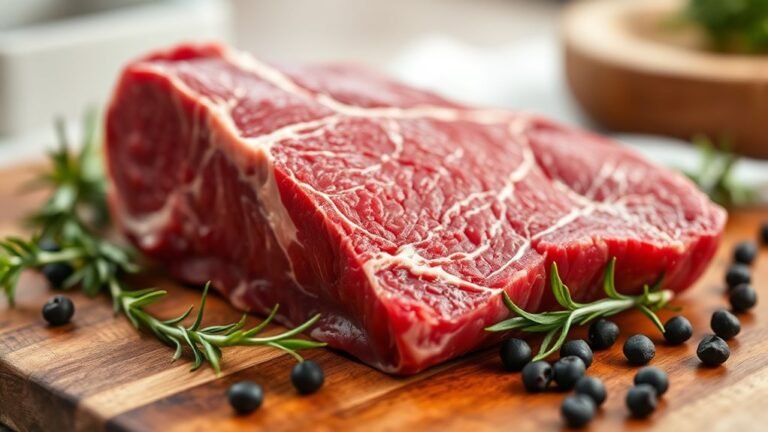
You can spot Wagyu beef by its fine, evenly spread marbling that looks like delicate white veins.
This is quite different from the larger fat patches you typically find on regular beef.
Additionally, its bright pink color stands out against the darker red of typical beef.
Wagyu melts in your mouth with a buttery texture and rich flavor, all thanks to superior fat distribution.
It’s also graded by strict standards that you won’t see with regular beef.
Keep exploring to uncover more about its unique qualities!
Visual Characteristics of Wagyu Beef
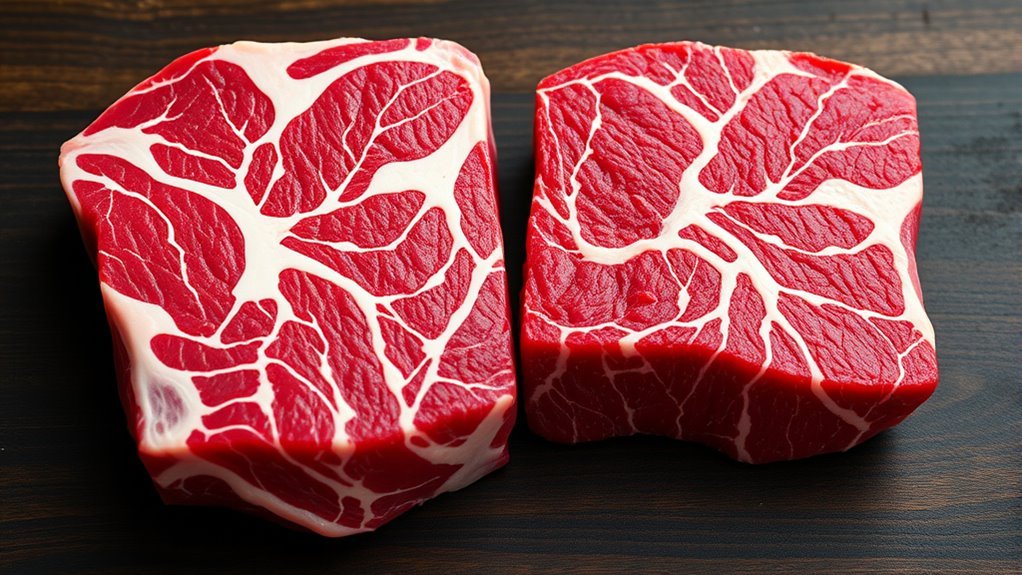
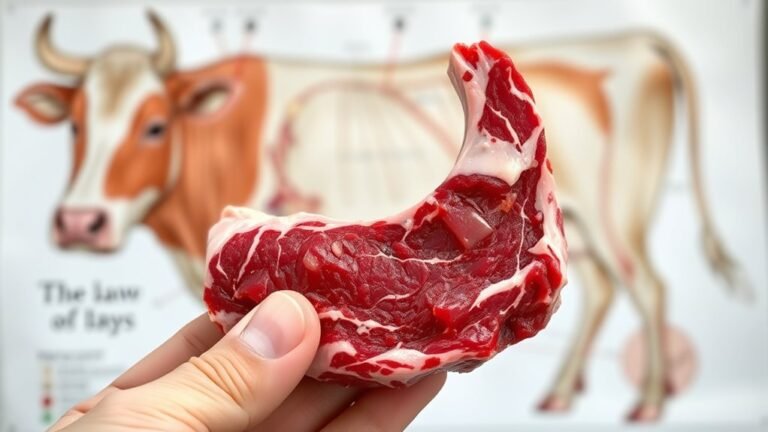
When you examine Wagyu beef, you’ll notice its intricate marbling looks like thin white veins woven throughout the meat.
This marbling, or intramuscular fat, is evenly distributed, giving the beef a smooth, glossy appearance that stands out visually.
Intramuscular fat is evenly spread, creating a smooth, glossy look that visually distinguishes the beef.
Unlike regular beef, which often has a denser fat cap and coarser fat deposits, Wagyu’s fat is fine and delicate, creating a consistent pattern that enhances the meat’s visual appeal.
The color of Wagyu beef is also distinct, showing a bright pink hue instead of the darker, iron-red tone typical of regular beef.
These visual characteristics make Wagyu easily identifiable and highlight its superior quality through its unique marbling and overall appearance.
Genetic Origins and Breed Differences
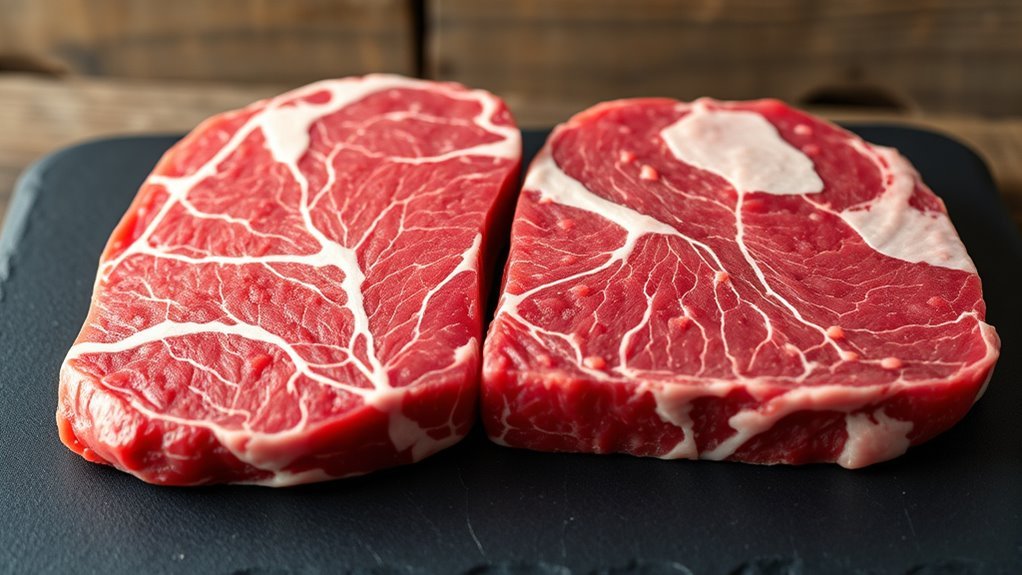
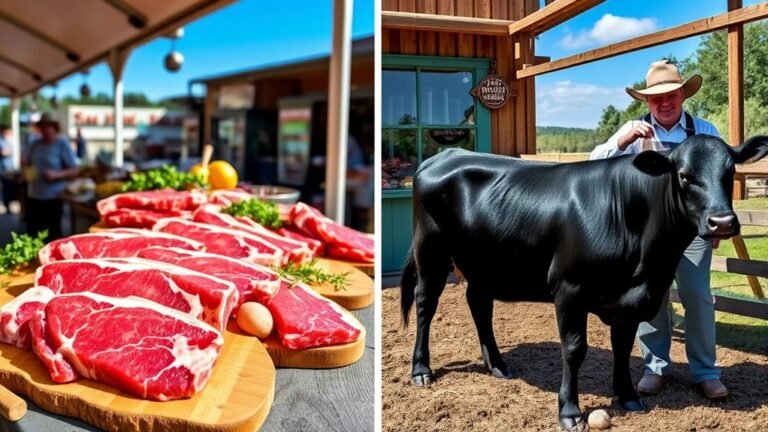
Because Wagyu beef comes from specific Japanese cattle breeds, understanding its genetic origins helps you appreciate why its marbling is so unique.
The most common breed is Japanese Black, prized for its exceptional fat distribution. This breed’s genetic lineage is carefully preserved through strict breeding practices to maintain breed purity.
Unlike regular beef cattle, Wagyu’s genetics foster intense marbling, giving it a distinct texture and flavor.
Here’s what sets Wagyu apart genetically:
- Developed in isolation within Japan, creating unique traits.
- Official certification tracks and verifies genetic lineage.
- Crossbreeding outside Japan is limited to protect breed purity.
- Japanese Black dominates Wagyu production due to superior marbling.
Knowing this helps you understand why Wagyu beef stands apart from regular beef.
Marbling and Fat Content Comparison
Wagyu’s unique genetics directly influence its distinctive marbling and fat content, setting it apart from regular beef.
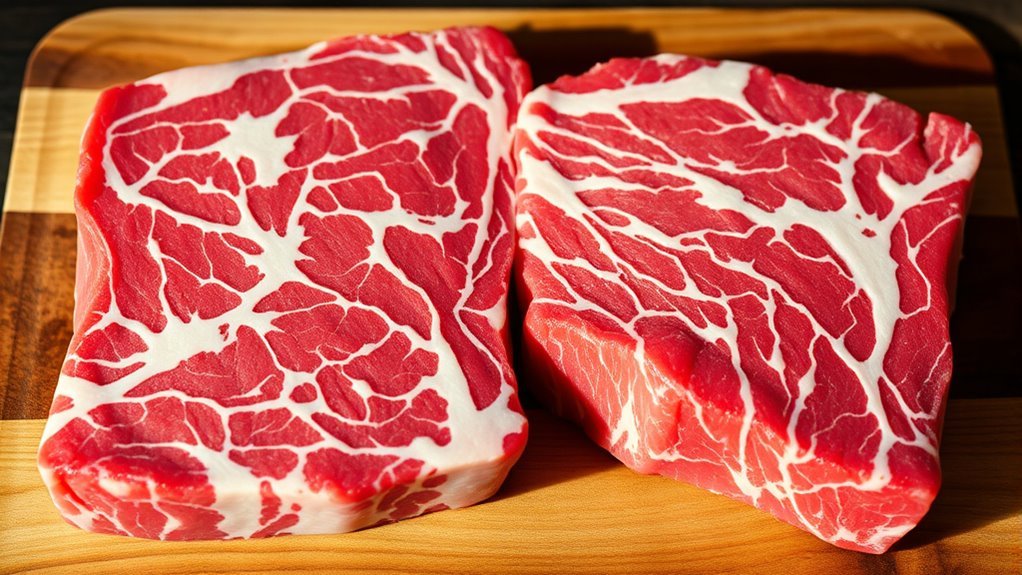
When you look closely, Wagyu displays an intricate pattern of fine, white marbling fibers evenly spread throughout the meat.
This is unlike the larger, uneven fat cap found on regular beef.
The marbling appears as thin, web-like streaks, creating a glossy, uniform visual contrast that’s easy to spot.
You’ll notice Wagyu’s fat content often exceeds 40% DMP in top grading, while regular beef has much lower marbling levels.
This higher fat content contributes to Wagyu’s signature melt-in-your-mouth texture.
So, when comparing cuts, focus on the evenness and delicacy of marbling.
These features highlight Wagyu’s superior quality and set it apart visually and in grading standards.
Flavor Profiles and Texture Distinctions
If you want a beef experience that truly melts in your mouth, you’ll find Wagyu’s ultra-rich, buttery flavor and tender texture hard to beat.
Its high marbling not only enriches the flavor but also creates a creamy, velvety texture that distinguishes it from regular beef.
Here’s what sets Wagyu apart:
- Intense marbling that melts at lower temperatures, enhancing flavor and texture.
- Deep umami taste, offering a more complex, savory profile.
- Exceptionally tender, melt-in-your-mouth texture compared to regular beef’s firmer bite.
- Creamy mouthfeel that adds lusciousness to every bite.
Now, in contrast, regular beef has less marbling.
It offers a more robust, beefy flavor and a chewier texture, especially when cooked thoroughly.
Grading Systems and Quality Certifications
Understanding the flavor and texture differences between Wagyu and regular beef is just part of the story.
The grading system plays a pivotal role in identifying authentic Wagyu.
Japan’s Meat Grading Association assigns grades like A5, where “A” represents yield and “5” indicates marbling quality, measured by the Beef Marbling Score (BMS).
Authentic Wagyu must meet strict quality certifications, including a BMS of 6 or higher.
In contrast, the USDA grading system (Prime, Choice, Select) is less detailed about marbling.
| Grading System | Key Feature |
|---|---|
| Japanese A5 | Highest marbling & yield |
| Beef Marbling Score (BMS) | 6+ for authentic Wagyu |
| USDA Prime | General quality grade |
| Quality Certifications | Official Wagyu proof |
Look for these signs to spot genuine Wagyu.
Cooking Techniques for Wagyu vs. Regular Beef
Although both Wagyu and regular beef require careful cooking, Wagyu demands gentler techniques to preserve its delicate marbling and rich flavor.
You’ll want to focus on precise temperature control and avoid high heat that can melt its valuable intramuscular fat.
Here are key cooking techniques to contemplate:
- Use quick methods like searing or sous vide to lock in tenderness.
- Cook Wagyu at lower temperatures compared to regular beef.
- Avoid long cooking times to maintain Wagyu’s melt-in-your-mouth texture.
- Always rest the steak after cooking to redistribute fats and juices evenly.
Pricing Factors and Market Availability
Because Wagyu beef involves specialized breeding and stringent grading, you’ll find it carries a much higher price tag than regular beef.
Pricing depends heavily on the grade, with authentic A5 Wagyu costing several times more per pound than USDA Prime or Choice cuts.
Crossbred Wagyu offers a more affordable option but still surpasses standard beef prices.
The market for Wagyu is limited due to Japan’s strict export rules and the beef’s scarcity.
This makes it mostly available through specialty shops, upscale restaurants, or direct importers online.
If you’re looking to buy Wagyu, expect to pay a premium and consider the source carefully.
Authentic Wagyu’s rarity and import complexities profoundly impact both pricing and availability in your region.
Authenticity Verification and Labeling Tips
When you’re shopping for Wagyu beef, verifying its authenticity is essential to guarantee you’re getting the real deal.
Always check for a Certificate of Authenticity that outlines the beef’s source, breed, and grading standards.
Verify authenticity by checking for a Certificate of Authenticity detailing source, breed, and grading standards.
Authentic Wagyu comes with clear traceability, allowing you to track its lineage through a breed-specific ID.
Be cautious of vague labels claiming “Wagyu” without proper certification.
Here are some quick tips to help you verify authenticity:
- Look for official documentation from recognized associations, like the Japanese Meat Grading Association.
- Confirm the presence of a breed-specific ID number linked to lineage records.
- Check if the vendor provides traceability information for the beef.
- Note symbols like the bronze Kobe statue, indicating authorized Kobe beef sales.
These steps guarantee you choose genuine Wagyu over imitations.
Health Benefits of Wagyu Fat Composition
If you want to enjoy beef that’s both flavorful and better for your heart, Wagyu’s fat composition offers a unique advantage.
Its famous marbling isn’t just for taste—it’s packed with monounsaturated fatty acids, which are healthier than the saturated fats in regular beef.
This intramuscular fat also contains omega-3 and omega-6 fatty acids, boosting its nutritional profile.
Because Wagyu fat melts at lower temperatures, you get a rich flavor without the heaviness.
Plus, Wagyu’s fat is rich in antioxidants like oleocantal, known for anti-inflammatory benefits.
When you choose Wagyu, you’re not only savoring a tender, buttery texture but also supporting better heart health—just enjoy it in moderation to maximize these health benefits.
Frequently Asked Questions
How to Differentiate Wagyu Beef?
You can differentiate Wagyu beef by its fine, even marbling with thin fat veins, a glossy pinkish-red color, and consistent fat distribution.
Regular beef lacks this intricate marbling and has chunkier, uneven fat patches.
How to Know if It’s Real Wagyu?
You’ll know it’s real Wagyu by checking for intricate, web-like marbling and consistent pink color.
Plus, don’t forget to look for a Certificate of Authenticity.
Always look for official grades like A5 from the Japanese Meat Grading Association to be sure.
What’s the Difference Between a Wagyu Steak and a Regular Steak?
When you cut into Wagyu steak, you’ll see delicate, web-like marbling that melts like butter on your tongue.
This is quite different from regular steak’s coarser texture and darker color.
You’ll savor richer flavor and tenderness every time.
Is Costco Wagyu Real Wagyu Beef?
Costco Wagyu can be real, but you’ll want to check labels carefully.
Most are American crossbreeds, not pure Japanese Wagyu.
Look for certification, grading like A5 or BMS scores, and proof of origin to be sure.
Conclusion
When it comes to telling Wagyu beef from regular beef, remember, “the proof is in the pudding.”
You can spot Wagyu by its intense marbling, richer flavor, and tender texture. Knowing the breed, grading, and cooking methods helps you appreciate its unique qualities.
While Wagyu may cost more, its distinct taste and health benefits make it worth trying.
So next time you shop, use these tips to choose wisely and savor the difference.
In conclusion, Wagyu beef stands out due to its remarkable marbling and flavor profile, setting it apart from regular beef.
Understanding the breed and its grading can enhance your appreciation for this luxurious meat.
While it might be pricier, the unique taste and health advantages ensure that every bite is an indulgent experience.
Next time you’re at the market, keep these pointers in mind and enjoy the delicious difference!