
Where Does Corned Beef and Cabbage Come From?
If you’re curious about where corned beef and cabbage comes from, it has an interesting backstory!
This iconic dish began with Irish salt-curing methods that were used to preserve meat before the advent of refrigeration.
When Irish immigrants made their way to America, they adapted these techniques.
They opted for affordable corned beef, drawing influence from Jewish butchers’ curing practices.
This fusion created a new Irish-American tradition, which became especially popular for St. Patrick’s Day.
Isn’t it fascinating how these cultures intertwined to shape such a beloved dish?
Let’s explore the rich history and meaning behind corned beef and cabbage together!
Historical Roots of Corned Beef

Although you might associate corned beef with Irish cuisine today, its origins lie in the salt-curing methods developed in Ireland and Britain.
The history of corned beef begins with the use of grain salt—large salt “corns”—to preserve meat. This technique was essential for meat preservation before refrigeration.
Irish cattle were primarily raised for milk and farming, not beef, until British influence shifted dietary habits.
Salt-curing allowed beef to be stored longer and exported efficiently, especially since cattle were often too valuable to slaughter freely.
While corned beef became recognized as part of Irish food traditions, it actually reflects this British and Irish salt-curing heritage.
Later, Irish immigrants embraced corned beef, blending it into their culinary identity, but its roots firmly lie in these early preservation methods.
Irish Immigration and Culinary Adaptation

When Irish immigrants arrived in America during the 19th century, they quickly embraced corned beef, a staple they found affordable and readily available in Jewish neighborhoods.
This culinary adaptation replaced traditional Irish bacon with salt-cured beef, marking a shift in Irish-American cuisine.
Your resourcefulness shines as you blend Irish traditions with immigrant-influenced ingredients, creating a dish symbolic of Irish immigration. Corned beef and cabbage became especially popular during St. Patrick’s Day, reflecting both celebration and practicality.
| Aspect | Traditional Irish Dish | Irish-American Adaptation |
|---|---|---|
| Primary Meat | Irish bacon | Salt-cured beef |
| Availability | Limited | Readily available |
| Economic Feasibility | Expensive | Affordable |
| Cultural Significance | Irish traditions | Irish-American identity |
| Celebration | Everyday meals | St. Patrick’s Day |
The Role of Jewish Influence in Corned Beef Preparation
You can’t fully appreciate the story of corned beef and cabbage without recognizing the Jewish influence on its preparation.
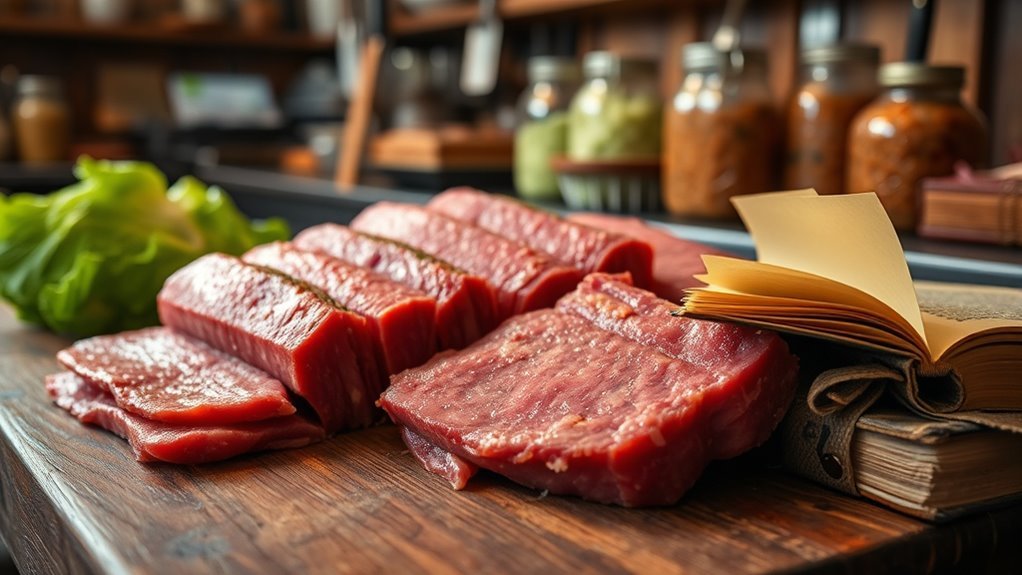
Jewish communities in New York popularized curing beef brisket using salt and spices, a method perfected by kosher butchers skilled in salting and preserving meat.
This curing technique made beef brisket tender and flavorful, creating a product that Irish immigrants found affordable and accessible.
Jewish kosher butchers’ expertise in salting helped meet the demand for long-lasting meat, aligning perfectly with the needs of Irish immigrants.
Over time, this collaboration between Jewish and Irish communities shaped the corned beef you know today, especially in holiday meals.
Corned Beef and Cabbage as an Irish-American Tradition
Since Irish immigrants in America sought affordable alternatives to traditional fare, they embraced corned beef and cabbage as a new cultural staple.
Corned beef, a salt-cured beef brisket, became popular because it was more accessible than the Irish bacon common in Ireland.
Corned beef gained popularity as an affordable alternative to the Irish bacon favored back home.
This Irish-American tradition emerged as a cultural adaptation influenced by Jewish culinary practices in cities like New York, where beef brisket was widely preserved.
While not part of traditional Irish cuisine, this dish quickly gained symbolic significance among Irish immigrants.
You’ll find corned beef and cabbage especially featured during St. Patrick’s Day celebrations, highlighting its role in Irish-American identity.
This tradition reflects how immigrant communities reshape their heritage, creating new customs that honor their roots while adapting to their new environment.
Modern Celebrations and Cultural Significance
Corned beef and cabbage has become a hallmark of Irish-American celebrations, especially on St. Patrick’s Day.
When you join in these festivities, you’re part of a tradition that honors Irish heritage while embracing the resourcefulness of immigrants who adapted their cooking in a new land.
Though not originally Irish, the dish’s festive appeal makes it a beloved cultural symbol in the U.S.
You’ll find it served year-round in many communities and restaurants, highlighting its lasting significance.
By enjoying corned beef and cabbage, you celebrate more than just a meal—you participate in a vibrant expression of Irish-American identity and history.
It’s all about blending old-world roots with American innovation.
This tradition keeps the spirit of St. Patrick’s Day alive, connecting you to a rich cultural legacy.
Frequently Asked Questions
Is Corned Beef and Cabbage Irish or German?
Corned beef and cabbage isn’t truly Irish or German.
You’ll find it’s mainly an Irish-American creation, adapted by immigrants in the U.S.
They used corned beef instead of traditional Irish bacon, making it a unique cultural dish.
Where Did the Corned Beef and Cabbage Tradition Come From?
You’ll find the corned beef and cabbage tradition started in Irish-American communities, where Irish immigrants adopted corned beef as an affordable substitute for traditional meats.
This created a St. Patrick’s Day staple unique to America.
What Part of the Cow Do They Get Corned Beef From?
You’ll find corned beef from brisket, a beefy, bold, and brawny cut.
It’s salted and slow-cooked, softening its sturdy structure.
What Do Irish Really Eat on St. Patrick’s Day?
You’ll find that Irish people usually eat dishes like Irish stew, soda bread, and Dublin Coddle on St. Patrick’s Day.
They don’t traditionally eat corned beef and cabbage, which is more of an American Irish custom.
Conclusion
When you dig into corned beef and cabbage, you’re tasting a rich blend of history and culture.
It’s more than just a meal; it’s a symbol of adaptation and community.
This dish shows how Irish immigrants made the best out of new circumstances.
So, next time you enjoy this dish, remember it’s a patchwork quilt of traditions.
It proves that sometimes, mixing things up leads to something truly special.
Corned beef and cabbage is a testament to resilience, bringing together flavors and stories from various backgrounds.
Every bite carries the weight of history, reminding us of the journey of those who came before.
In essence, this classic dish not only satisfies your hunger but also connects you to a shared heritage, showcasing the beauty of culinary evolution.