
Pork Vs Beef Ribs: 5 Reasons Which Is Better
If you’re on the hunt for the ultimate rib experience, you might be torn between pork and beef ribs.
Beef ribs are your best bet for hearty meatiness and bold umami flavors. However, they do require a longer cooking time and can be pricier.
On the other hand, pork ribs present a lighter, versatile flavor profile. They cook faster, which is great if you’re short on time, and they fit tighter budgets better.
In terms of nutrition, beef ribs tend to pack more calories and iron, while pork ribs are often better suited for leaner diets.
So, depending on your taste preferences, cooking time, and budget priorities, one type of rib may be a better match for you.
There’s definitely a lot more to explore about each option, so dive in and discover which ribs will be your favorite!
Size and Meatiness Comparison
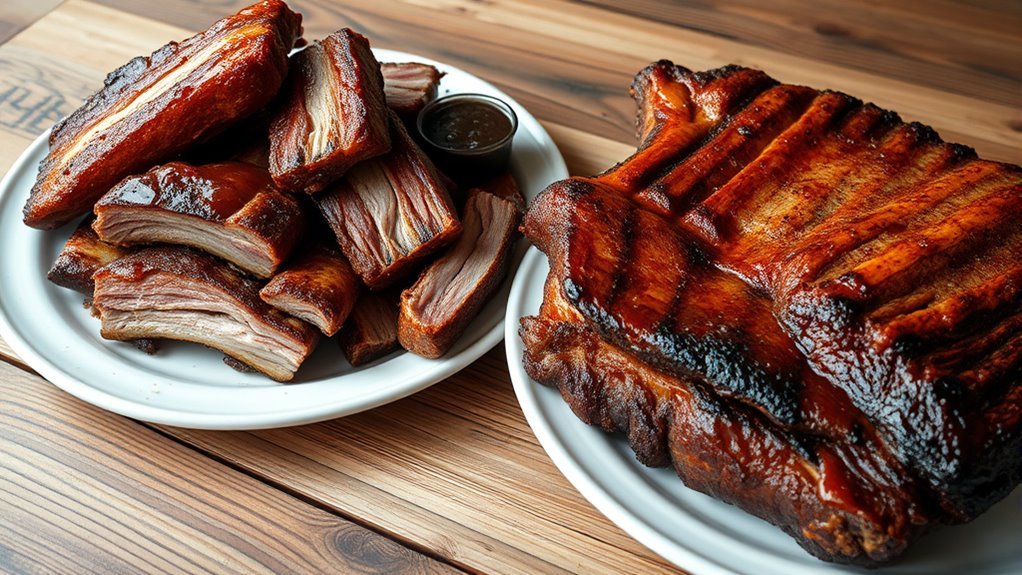
Although both pork and beef ribs offer delicious options, you’ll notice a big difference in size and meatiness.
Beef ribs are larger, measuring 8-12 inches with bones that can weigh over 2 pounds, while pork ribs are smaller, usually 3-6 inches with much lighter bones.
This size difference means beef ribs have a higher meat content and more fat per rib, giving them a hearty, meatier bite.
When you compare meatiness, beef ribs stand out due to their substantial volume, often nicknamed “dinosaur ribs.”
Because of their larger bone size and thickness, beef ribs require longer cooking time to become tender.
On the other hand, pork ribs cook quicker, thanks to their smaller size.
This meatiness comparison highlights how your choice depends on whether you want a smaller, quicker option or a larger, meatier rib experience.
Flavor Profiles and Seasoning Compatibility
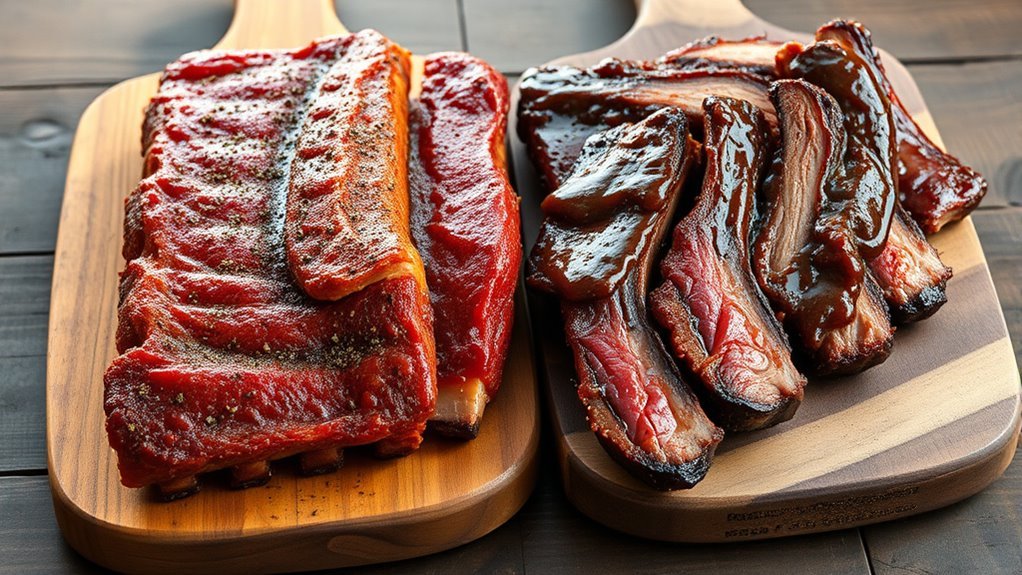
The size and meatiness of ribs shape not only how long you cook them but also how their flavors come through.
Beef ribs boast a robust umami flavor, thriving with simple seasonings like salt and pepper. This really emphasizes the smoky flavor and natural richness.
On the other hand, pork ribs have a mild taste and adapt well to bold spice blends, sweet sauces, and tangy marinades.
This offers them versatile seasoning compatibility.
| Rib Type | Flavor Profile | Best Seasonings & Sauces |
|---|---|---|
| Beef Ribs | Robust, savory umami | Salt, pepper, garlic, smoky flavor |
| Pork Ribs | Mild, adaptable | Sweet, spicy, tangy, complex blends |
| Both | Respond well to rubs | Dry rubs, marinades, versatile |
You’ll find that pork ribs suit adventurous sauces, while beef ribs shine with minimal seasoning.
Cooking Time and Techniques
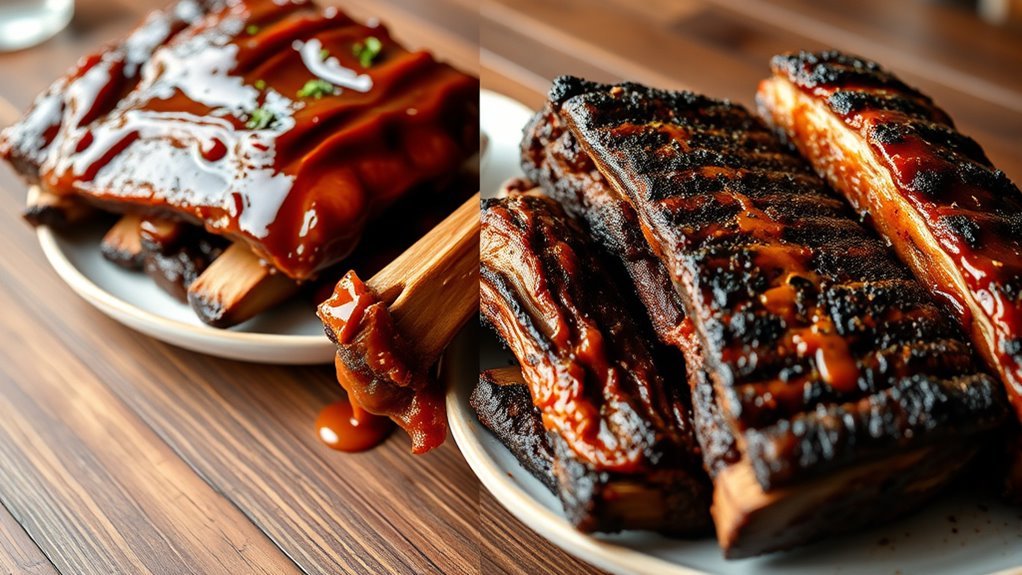
When you cook ribs, timing and technique make all the difference in tenderness and flavor.
Pork ribs typically require a cooking time of 4–6 hours at 225–250°F using low-and-slow smoking with indirect heat.
Popular methods like the 3-2-1 technique balance smoke duration and cooking duration perfectly.
Now, beef ribs are a bit different. Being larger and tougher, they need higher temperatures—about 275–300°F—and longer cooking durations.
They often benefit from braising or extended smoking to really break down that connective tissue.
Using foil wraps, or the Texas Crutch, can speed up cooking and lock in moisture, but it might soften the bark a bit.
Regardless of your choice, monitoring temperature and adjusting smoke duration guarantees preferable tenderness.
Whether you choose pork or beef ribs, mastering these cooking techniques guarantees delicious results every time.
Cost Differences and Budget Considerations
Because pork ribs generally cost about $1.50 less per pound than beef ribs, you’ll find them to be a more budget-friendly option for many meals.
This price difference largely stems from lower production costs and greater availability of pork ribs in your local grocery store.
When you’re planning a meal on a tight budget, pork ribs offer better affordability without sacrificing flavor.
Beef ribs, while flavorful, tend to have higher meat prices due to their larger size and longer cooking times, which increase overall cooking costs.
If you’re feeding a crowd or aiming to keep your grocery bill down, choosing pork ribs helps you stretch your budget further.
Ultimately, understanding these cost differences lets you make smart choices that fit your budget and dining needs.
Nutritional Content and Dietary Impact
Although both pork and beef ribs offer satisfying flavors, they differ markedly in nutritional content and dietary impact.
Beef ribs pack higher calories, protein, and iron, thanks to their increased fat content and fat-to-meat ratio, boosting their nutritional density.
This makes beef ribs a great choice if you want more essential nutrients and greater satiety.
On the other hand, pork ribs are leaner with fewer calories and less heme iron, making them a lower-fat alternative that still delivers protein but with a milder flavor.
If you’re watching your calorie intake or prefer a lighter taste, pork ribs fit the bill.
Ultimately, your choice depends on whether you prioritize richer nutrition or a leaner cut with fewer calories.
Frequently Asked Questions
Which Is Better, Pork Ribs or Beef Ribs?
You’ll find pork ribs better if you want quicker cooking and a milder flavor.
But go for beef ribs if you prefer richer taste and juiciness.
It really depends on your cooking style and flavor preference.
Are Pork Ribs Healthier Than Beef?
Yes, pork ribs are generally healthier than beef ribs because they have lower fat and calorie content.
If you trim and cook them properly, you’ll enjoy a leaner, heart-friendly option without sacrificing flavor.
Why Is Beef Better Than Pork?
You’ll enjoy beef more because it’s richer in flavor and juicier, thanks to higher fat content and marbling.
Plus, its robust umami and tender texture after slow cooking make it a heartier, more satisfying choice.
Which Ribs Are the Healthiest?
You might be surprised, but pork ribs take the health crown.
They’re leaner with less fat, so if you trim wisely and avoid sugary sauces, you’ll enjoy a flavorful yet healthier meal every time.
Conclusion
When choosing between pork and beef ribs, remember that “variety is the spice of life.”
Pork ribs offer quicker cooking and a sweeter flavor, while beef ribs bring a heartier, meatier bite.
Consider your budget, cooking time, and nutritional goals to pick what suits you best.
Ultimately, it’s about what satisfies your taste buds and fits your lifestyle.
Don’t be afraid to try both and enjoy the delicious journey!
In conclusion, whether you lean towards the tender sweetness of pork ribs or the robust flavor of beef ribs, both options can delight your palate.
Experiment with different recipes and cooking methods to discover which one you prefer.
Remember, it’s all about enjoying the experience and finding what works for you.
So, gather your friends and family, fire up the grill, and indulge in the wonderful world of ribs!