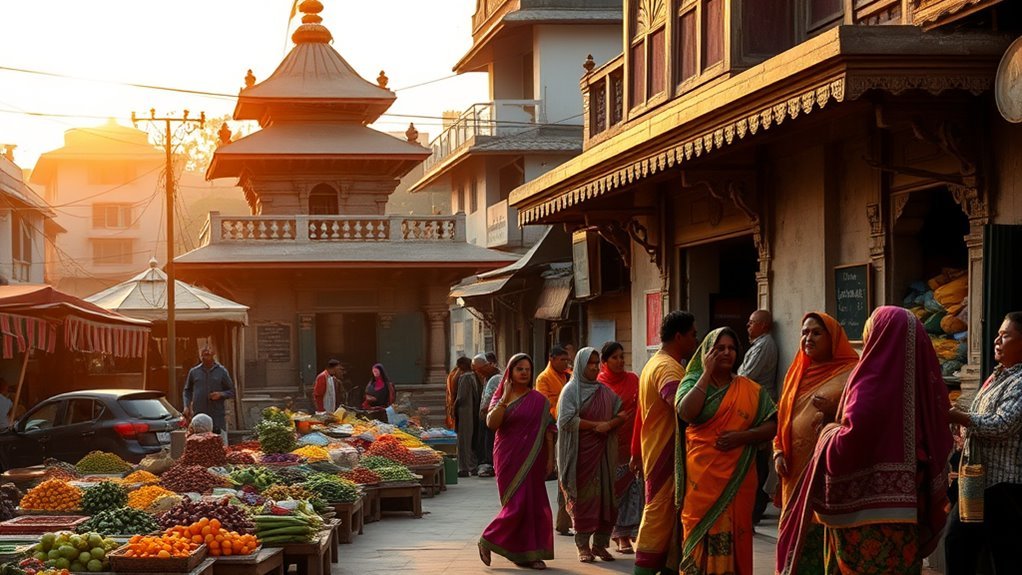
Is Eating Beef Illegal in Nepal? Understanding the Law and Religious Beliefs
In Nepal, the consumption of beef is a complex issue deeply rooted in cultural, legal, and religious beliefs. Cows hold a sacred status in Hindu culture, leading to strict laws against their slaughter.
This means that slaughtering cows can result in fines or even jail time.
However, it’s important to note that eating beef isn’t explicitly banned in the country.
Some communities do consume it, despite the cultural sensitivities surrounding the practice.
Beef can occasionally be found in certain areas, but it remains a highly sensitive topic tied to deep-seated religious beliefs and social norms.
If you want to understand the nuances surrounding beef consumption in Nepal, it’s essential to explore the various layers that shape this issue.
Cultural and Religious Significance of Cows in Nepal
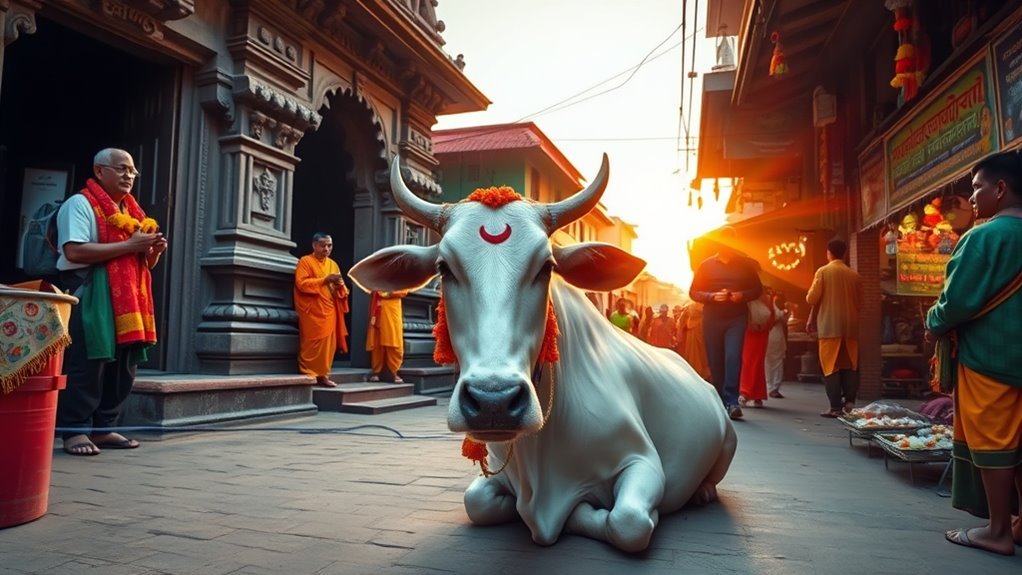
Although you might see cows wandering freely through Kathmandu’s streets, their presence is deeply rooted in Nepal’s cultural and religious fabric.
Cows roam freely in Kathmandu, reflecting their profound cultural and religious importance in Nepal.
In Hinduism, you worship cows as sacred mother figures, symbolizing life and prosperity. This reverence influences many aspects of daily life and cultural norms.
You’ll notice that cows aren’t just animals here; they’re national symbols embraced in religious rituals and festivals.
Many people, especially Hindus, avoid eating beef out of respect for these beliefs.
The cow’s significance goes beyond spirituality; it shapes social customs and dietary choices throughout Nepal.
Legal Framework Surrounding Cow Slaughter and Beef Consumption
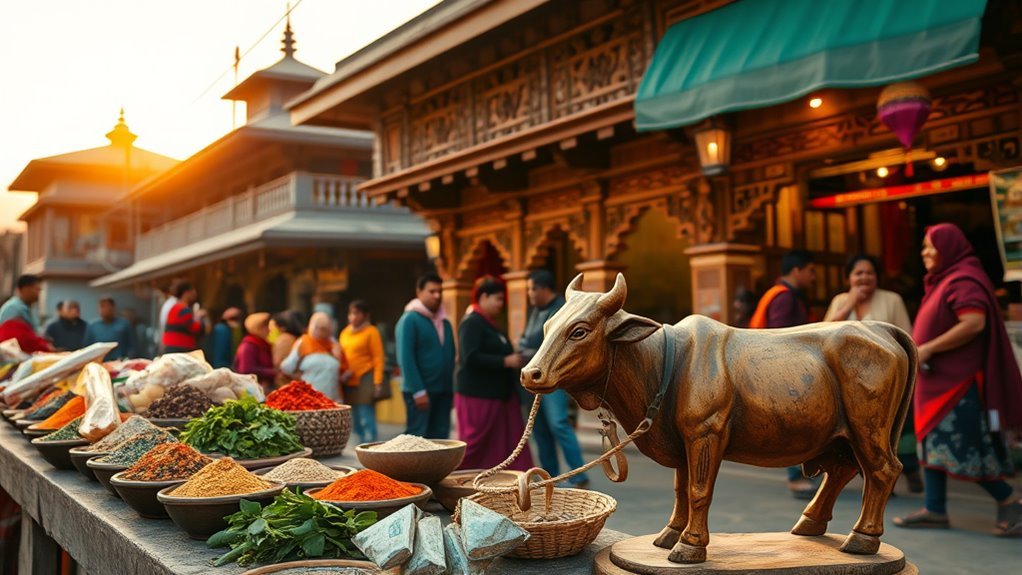
Because Nepal’s constitution honors cows as sacred national animals, the law strictly prohibits cow slaughter under the Muluki Ain.
You should know that killing cows is a criminal offense, carrying legal restrictions that include fines and imprisonment.
These penalties underline the cultural and religious weight the nation places on cows.
While the law bans slaughter, beef can still be found in certain restaurants and black markets, reflecting a complex reality.
Even so, the legal framework remains clear: cow slaughter is illegal.
You’ll find that despite this, some communities maintain their traditional beef consumption, but such practices exist outside the official legal boundaries.
Understanding these legal restrictions helps you grasp the delicate balance between law and cultural practices in Nepal.
Diverse Food Practices Among Nepal’s Ethnic Communities
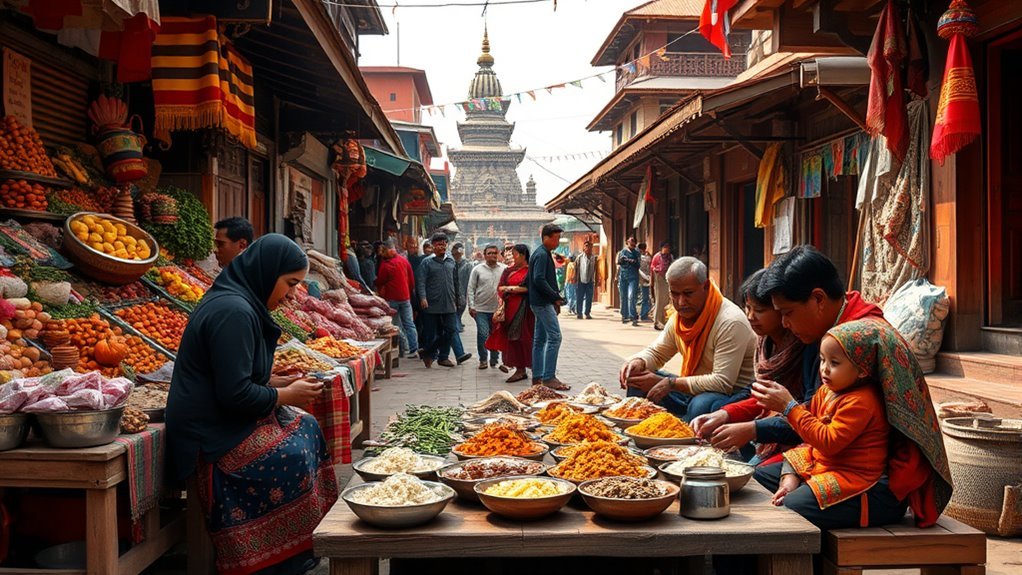
When you explore Nepal’s diverse ethnic communities, you’ll see that food customs vary widely, especially regarding meat consumption.
Many indigenous groups like the Magar, Gurung, Rai, and Limbu traditionally avoid beef, favoring pork due to religious and cultural beliefs.
Hindu communities, which form over 80% of Nepal’s population, regard cows as sacred and prohibit beef consumption.
However, some ethnic groups such as the Thakalis and certain Newar communities openly include beef in their diets.
Despite legal restrictions on cow slaughter, beef remains available in regions where cultural practices allow it.
These diverse food practices reflect a complex interplay of religion, culture, and regional traditions, making Nepal’s dietary landscape remarkably varied when it comes to beef consumption.
Social and Political Debates on Beef Consumption
The varied dietary customs among Nepal’s ethnic groups don’t just shape daily meals—they spark intense social and political debates.
You’ll find the sale of beef highly contentious due to Hindu reverence for cows, yet some communities consume it openly.
This clash raises key issues:
- How can Nepal uphold cow protection laws while respecting its secular state constitution?
- Why do Janajati groups face discrimination and legal action for practices integral to their culture?
- Can the government reconcile international human rights calls against beef bans with local religious sentiments?
As you observe, the beef debate reflects deeper tensions between tradition and modern legal principles.
It’s a hot topic that goes beyond food to challenge Nepal’s identity and governance.
Contemporary Perspectives on Meat-Eating and Vegetarianism in Nepal
Although Nepal’s laws prohibit cow slaughter, you’ll find a complex reality where meat-eating and vegetarianism coexist amid cultural, religious, and legal tensions.
Hindu beliefs deeply respect cows, making beef taboo. Yet some communities eat other meats freely.
Despite legal bans, beef surfaces discreetly, highlighting diverse practices you might witness depending on the region or group.
This blend reflects ongoing debates on identity, faith, and rights.
| Aspect | Emotion/Impact |
|---|---|
| Cow sacredness | Reverence and respect |
| Beef consumption | Controversy and secrecy |
| Vegetarianism | Tradition and purity |
| Meat diversity | Cultural richness and conflict |
Frequently Asked Questions
Do People Eat Beef in Nepal?
Yes, you’ll find people eating beef in Nepal, especially in urban areas and among certain communities.
Even though it’s banned officially, many still consume it privately or purchase imported beef in markets and restaurants.
What Is the Cow Law in Nepal?
You can’t legally slaughter cows in Nepal, as it’s prohibited by law and considered sacred.
However, eating beef isn’t explicitly banned, so the law mainly targets killing cows, not consuming beef itself.
What Can You Not Eat in Nepal?
You won’t find beef on the menu, as cows hold a special status here.
Besides that, you should avoid eating certain wild animals and endangered species—they’re protected by law to keep Nepal’s nature thriving and respectful.
Is Eating Cows Illegal in Nepal?
You’re not breaking the law by eating beef in Nepal since it’s not explicitly illegal.
However, killing cows is banned due to their sacred status.
Conclusion
When it comes to eating beef in Nepal, you’ll find it’s not just about food but deep respect for culture and religion.
While cow slaughter is legally restricted, dietary practices vary among ethnic groups, reflecting Nepal’s diversity.
Remember, “When in Rome, do as the Romans do”—understanding local customs helps you navigate these sensitive issues with respect.
So, whether you choose to eat beef or not, being aware of the cultural and legal landscape is key.
In conclusion, eating beef in Nepal is a complex issue intertwined with cultural and religious beliefs.
With cow slaughter being legally restricted, it’s essential to respect local customs and practices.
Ultimately, whether you partake in beef consumption or not, understanding the cultural and legal context is crucial for a respectful experience in Nepal.