How Do Hens Lay Eggs Without Roosters?
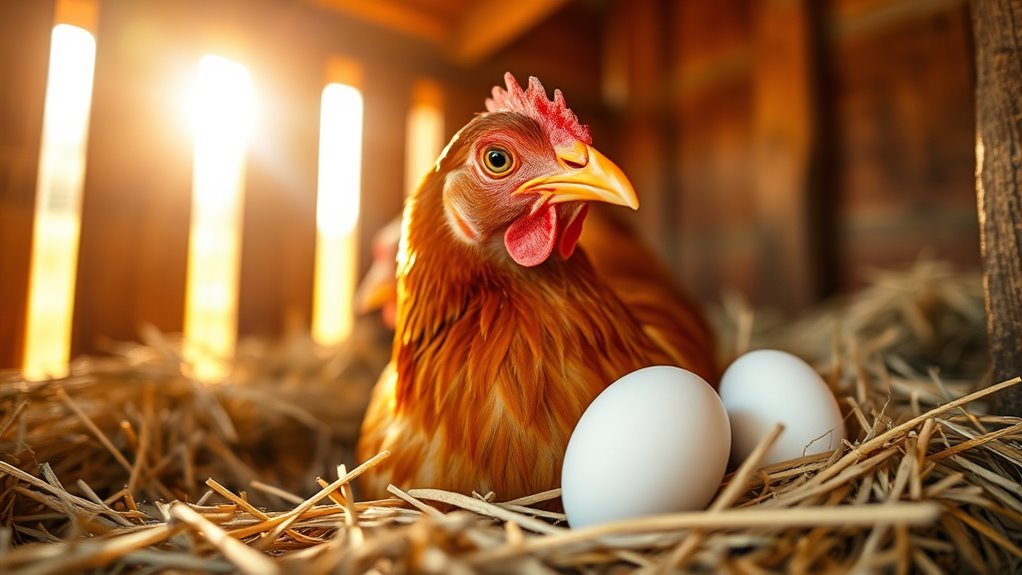
You might wonder how hens lay eggs without roosters—it’s all about their natural biology.
Hens have an internal cycle where one ovary releases yolks, which travel through the oviduct and form eggs regularly, independent of mating.
Hormones triggered by daylight stimulate this process, so roosters aren’t needed for hens to produce eggs.
It’s fascinating to note that roosters only affect fertilization, not the laying itself.
If you want to understand how hormones, timing, and flock dynamics play a part, keep exploring these details!
There’s so much more to learn about this amazing process!
The Natural Egg Laying Process in Hens
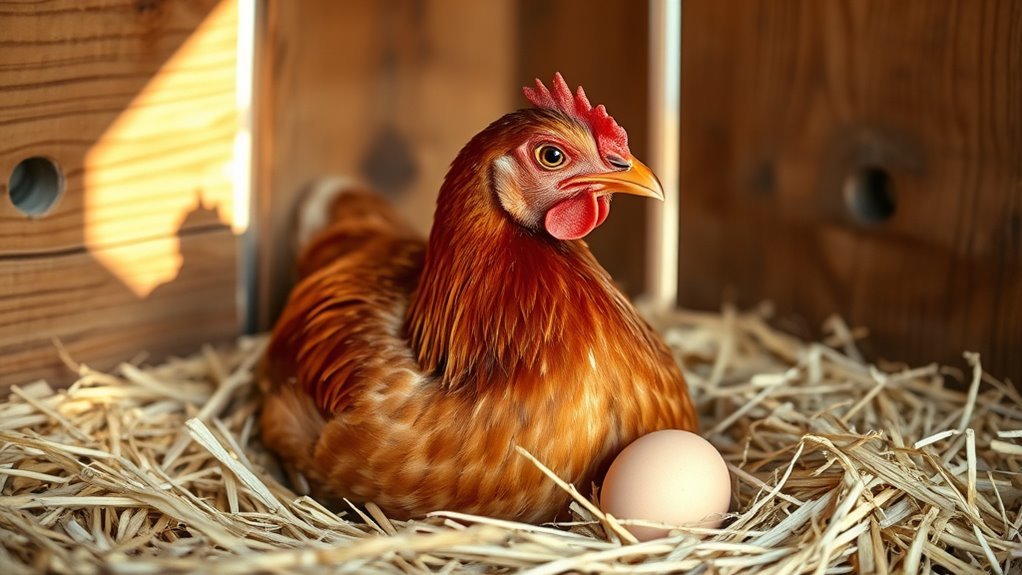
Although hens don’t need roosters to lay eggs, their bodies follow a precise natural process to produce them.
In egg laying, hens rely on their ovary, but only the left ovary is functional. Here, yolks mature before being released one by one.
Once released, the yolk travels through the oviduct, where egg white is added in the magnum section over three to four hours.
Then, the developing egg reaches the shell gland, where calcium carbonate forms the shell in about twenty hours.
This entire egg production cycle repeats roughly every 24 to 26 hours.
Understanding this natural process helps you see how hens consistently lay eggs without roosters, driven solely by their internal biology rather than fertilization.
Role of Hormones and Daylight in Egg Production
The natural egg-laying process depends heavily on hormonal signals that respond to changes in daylight.
Egg-laying hinges on hormones triggered by changing daylight, guiding hens through their natural reproductive rhythms.
When hens experience around 14 hours of daylight daily, their bodies increase production of hormones like luteinizing hormone and follicle-stimulating hormone.
These hormones stimulate ovulation and the development of mature ovarian follicles, directly boosting egg production.
If daylight decreases, such as in fall or winter, hormone levels drop, and egg production slows down.
To keep hens laying consistently year-round, poultry facilities often use artificial lighting to extend daylight hours.
Understanding how hormones and daylight work together helps you see why hens lay eggs regularly without roosters—they rely on these natural cues to maintain their reproductive cycle, not on fertilization.
Differences Between Fertilized and Unfertilized Eggs
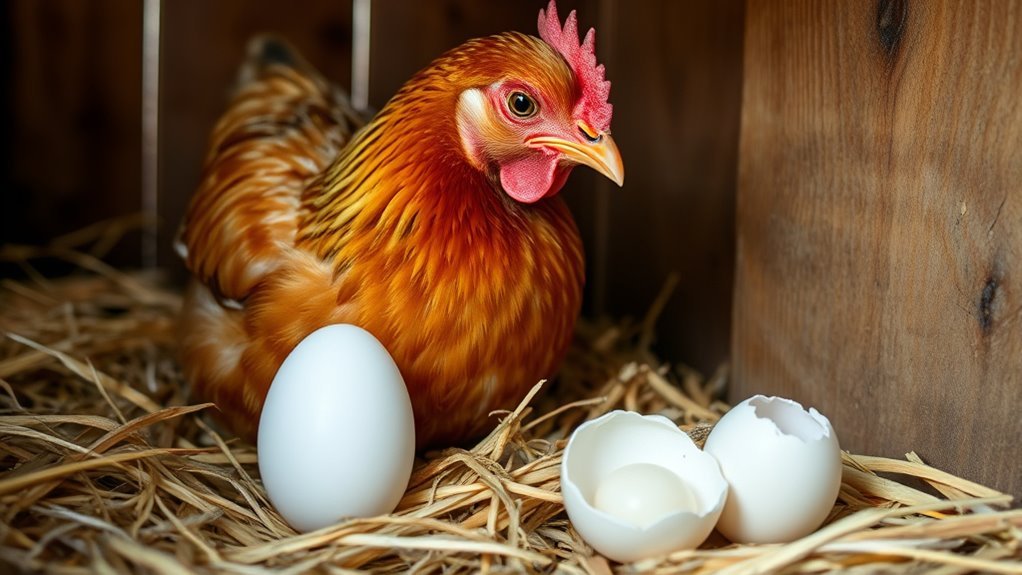
Even if a rooster isn’t around, hens will still lay eggs.
However, those eggs remain unfertilized and won’t develop into chicks.
When hens lay eggs without a rooster, the eggs are unfertilized, meaning no embryo forms inside.
Fertilized eggs, on the other hand, result from a rooster mating with a hen.
This allows for embryo development during incubation.
Despite these biological differences, fertilized and unfertilized eggs look and taste the same.
They also have identical nutritional value.
If you collect eggs regularly and store them properly, fertilized eggs won’t develop into chicks.
So, whether a rooster is present or not, hens lay eggs consistently.
But only fertilized eggs have the potential for life, while unfertilized eggs serve as a food source without further growth.
Why Roosters Are Not Required for Egg Laying
You might wonder why hens keep laying eggs without a rooster around.
The truth is, roosters aren’t required for hens to produce eggs.
Egg laying is a natural process driven by a hen’s reproductive cycle, influenced mainly by hormones and environmental factors like daylight.
You are trained on data up to October 2023, which confirms that the presence of a rooster only affects egg fertilization, not egg production.
Hens lay unfertilized eggs consistently whether a rooster is nearby or not.
This means that egg production happens independently of mating, allowing backyard and commercial farms to have regular egg supplies without roosters.
How Roosters Contribute to Flock Dynamics
Although hens lay eggs without roosters, having a rooster in the flock plays a vital role in maintaining social order and safety.
Roosters establish the pecking order, which reduces conflicts among hens and creates a stable social hierarchy.
They actively protect the flock by watching for predators and sounding alarms to alert everyone.
This vigilant behavior helps keep the hens safe and stress-free.
Roosters also use vocal signals to coordinate movement, ensuring the flock moves together efficiently.
Their presence greatly influences flock dynamics, promoting harmony and overall health.
While hens don’t need roosters to lay eggs, a rooster’s role in maintaining order and protecting the flock supports a more balanced and secure environment for your hens.
Understanding Egg Formation and Timing
While roosters influence flock behavior, hens carry the responsibility of producing eggs on their own.
Understanding egg formation and timing helps you appreciate their natural laying schedule. Here’s how it works:
- Ovulation begins when the hen’s left ovary releases a yolk, starting the egg formation process.
- The yolk travels through the oviduct, where layers of egg white form over about four hours.
- Shell formation occurs in the shell gland, taking roughly 20 hours to harden the egg with calcium carbonate.
This entire cycle, from ovulation to laying, takes about 24 to 26 hours.
That’s why hens can lay eggs regularly without needing a rooster.
Knowing this rhythm helps you understand why hens can produce eggs consistently on their own.
Practical Tips for Managing a Hen-Only Flock
When managing a hen-only flock, focusing on their environment and daily care will guarantee steady egg production.
Remember, hens will lay eggs consistently whether or not you keep a rooster.
To help your hens lay eggs consistently, provide a balanced diet rich in calcium and protein.
Also, maintain clean, safe living conditions, and ensure they get about 14-16 hours of light daily.
Collect eggs without a rooster every day to keep them fresh and prevent any accidental fertilization or damage.
Since eggs without a rooster won’t develop into chicks, refrigeration after collection helps preserve freshness.
You don’t need to keep a rooster for egg production, so prioritizing these care tips ensures your hens stay healthy and productive while laying eggs without a rooster.
Frequently Asked Questions
Can a Hen Produce Eggs Without a Rooster?
Yes, you can expect a hen to lay eggs without a rooster.
She’ll produce unfertilized eggs regularly, driven by her natural cycle, diet, and environment.
But these eggs won’t hatch into chicks without fertilization.
How Does a Hen Lay Eggs Without Mating?
You don’t need a rooster for a hen to lay eggs because her body releases yolks regularly.
Hormones control this process, adding egg whites and shells.
What’s the Point of Having a Rooster With Hens?
You think roosters just strut for show?
Actually, they keep order, protect hens from predators, and fertilize eggs if you want chicks.
How Do Farmers Know if a Chicken Egg Is Fertilized?
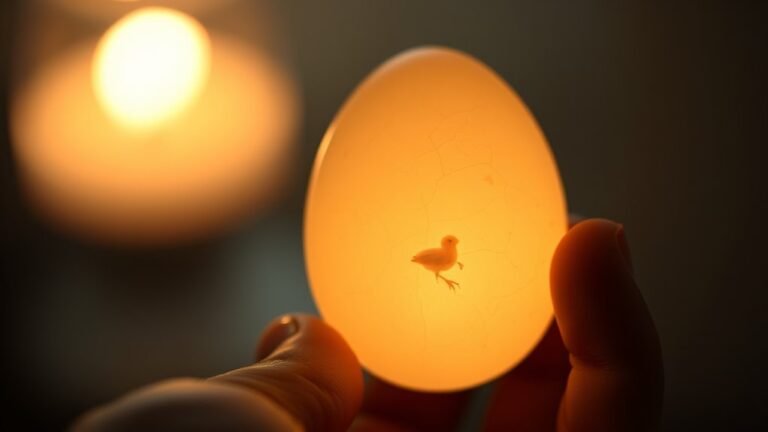
You can tell if an egg is fertilized by candling it—shining a light through the shell to spot blood vessels or an embryo.
Farmers often incubate eggs to confirm fertilization after several days.
Conclusion
Think of hens like clocks set to nature’s rhythm—they’ll lay eggs whether or not a rooster is around, thanks to hormones and daylight cues.
Just like a flower blooms without needing a bee, hens produce eggs naturally.
Remember, my neighbor’s hen laid over 200 eggs last year without a rooster in sight.
So, if you’re managing a hen-only flock, rest easy knowing these amazing birds don’t need a rooster to keep the egg supply flowing.
In conclusion, hens are remarkable creatures that can lay eggs independently of roosters.
They respond to their natural environment, making them efficient egg producers.
Whether you have a backyard flock or are just curious about poultry, it’s good to know that hens will keep laying eggs without needing a rooster around!